
Flute Players
The Hopi kachina Kokopelli has a hump and is associated with fertility but traditionally does not carry a flute. Elder Hopis have referred to flute-playing rock art figures as “cicadas,” noise-making insects with a flute-like proboscis. The cicada is an important Hopi figure believed to bring the plant-nurturing heat essential for a good harvest.1
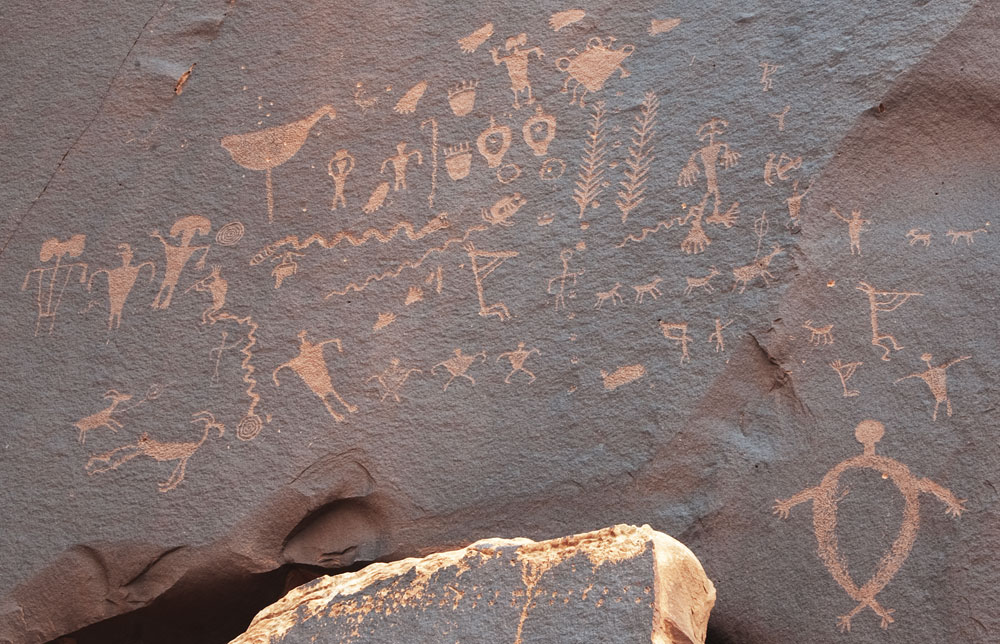
An Ancestral Pueblo panel with five flute players.

Left: a Hopi drawing of the Kokopelli kachina from Jesse Walter Fewkes’s Hopi Katcinas (1903). Right: the modern Kokopelli icon.
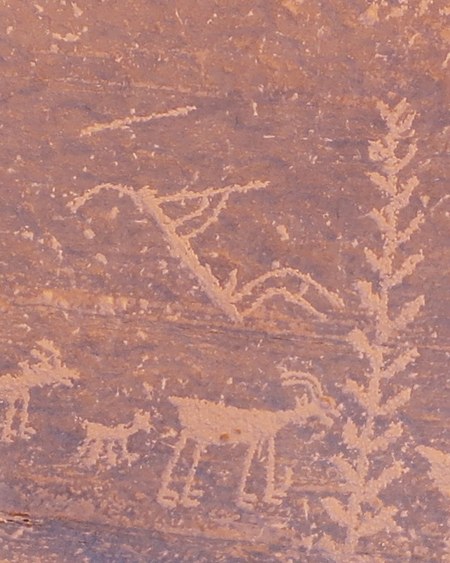
Ancestral Pueblo flute player displaying fertility characteristic of the traditional Kokopelli kachina.
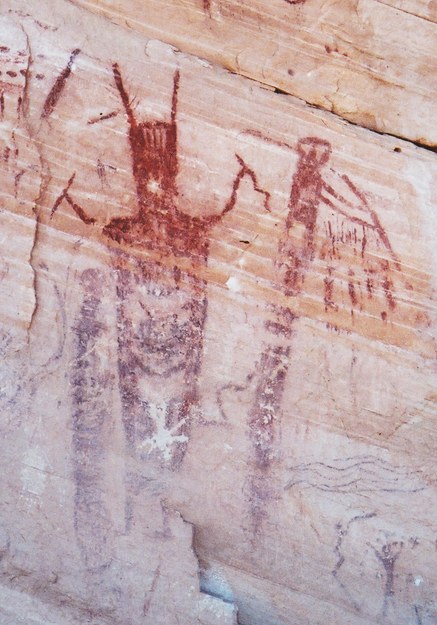
The figure on the right may be a Barrier Canyon Style flute player. Barrier Canyon Style figures often hold snakes so it can be hard to tell a flute from a snake.
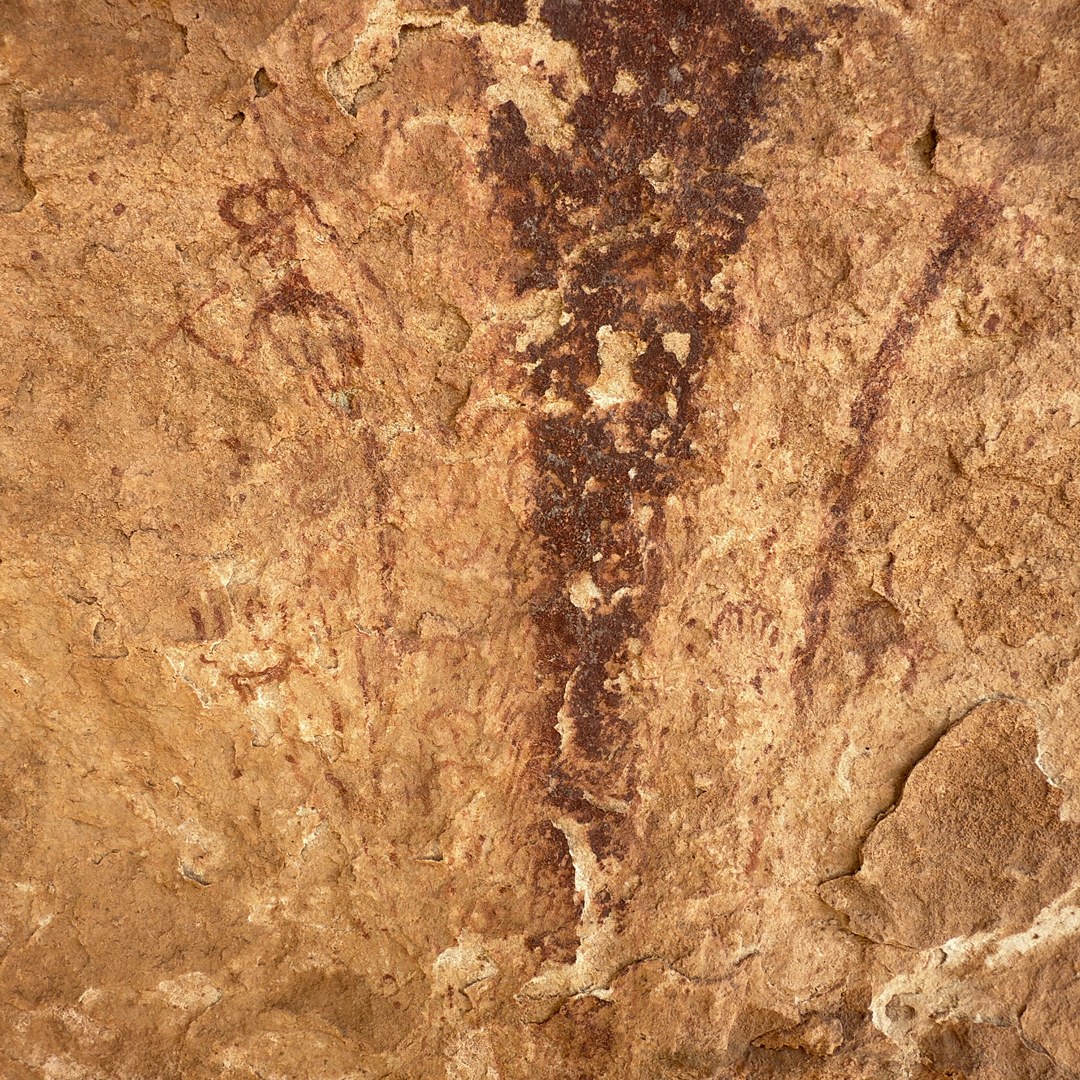
This small human-like BCS figure (5.5 inches / 14 centimeters tall) may also be playing a flute.
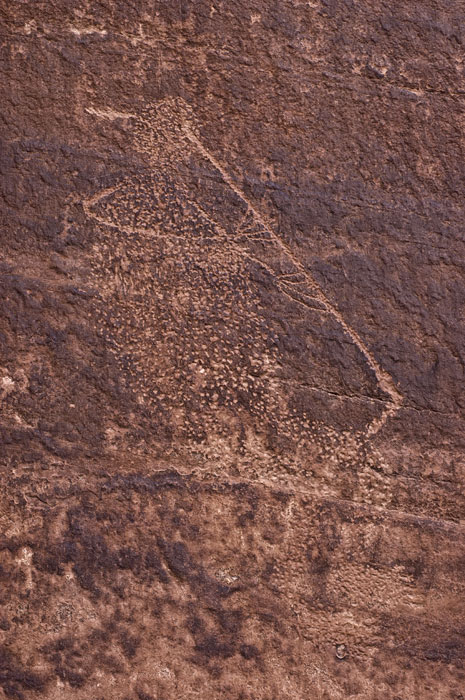
An Ancestral Pueblo flute player. Many flute players are simple stick figures. This one has a large stipple-pecked body.
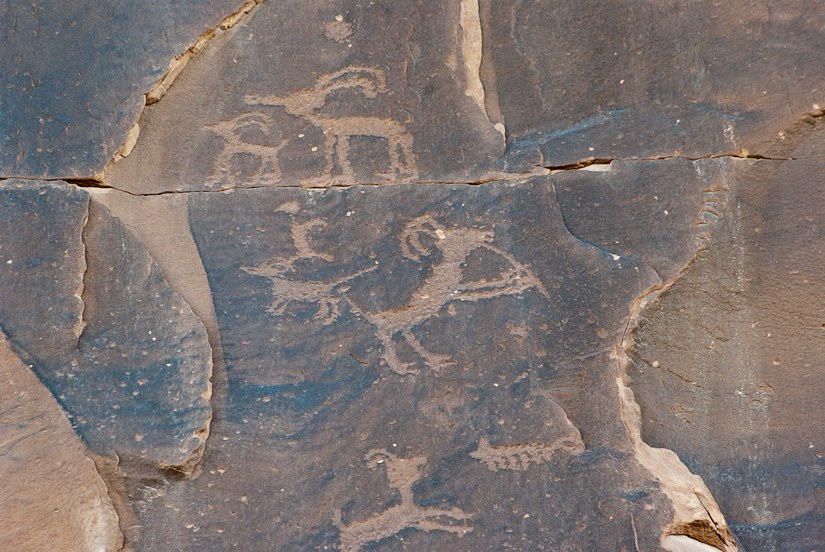
A flute-playing sheep, possibly Fremont.
Notes
- Ekkehart Malotki, Kokopelli: The Making of an Icon (Lincoln, NE: University of Nebraska Press, 2000).