Gallery › Ancestral Puebloan

Abajo-La Sal Style Rock Art

The Abajo-La Sal Style is an Ancestral Puebloan petroglyph style named for the Abajo and La Sal mountains of southeastern Utah. Archaeologist Sally Cole defined it in 1990 and dated it from before 1 CE to about 900 CE. Its human-like figures have broad shoulders and bodies that taper to a point. They often stand in rows among bighorn sheep, other animals, and long wavy lines.
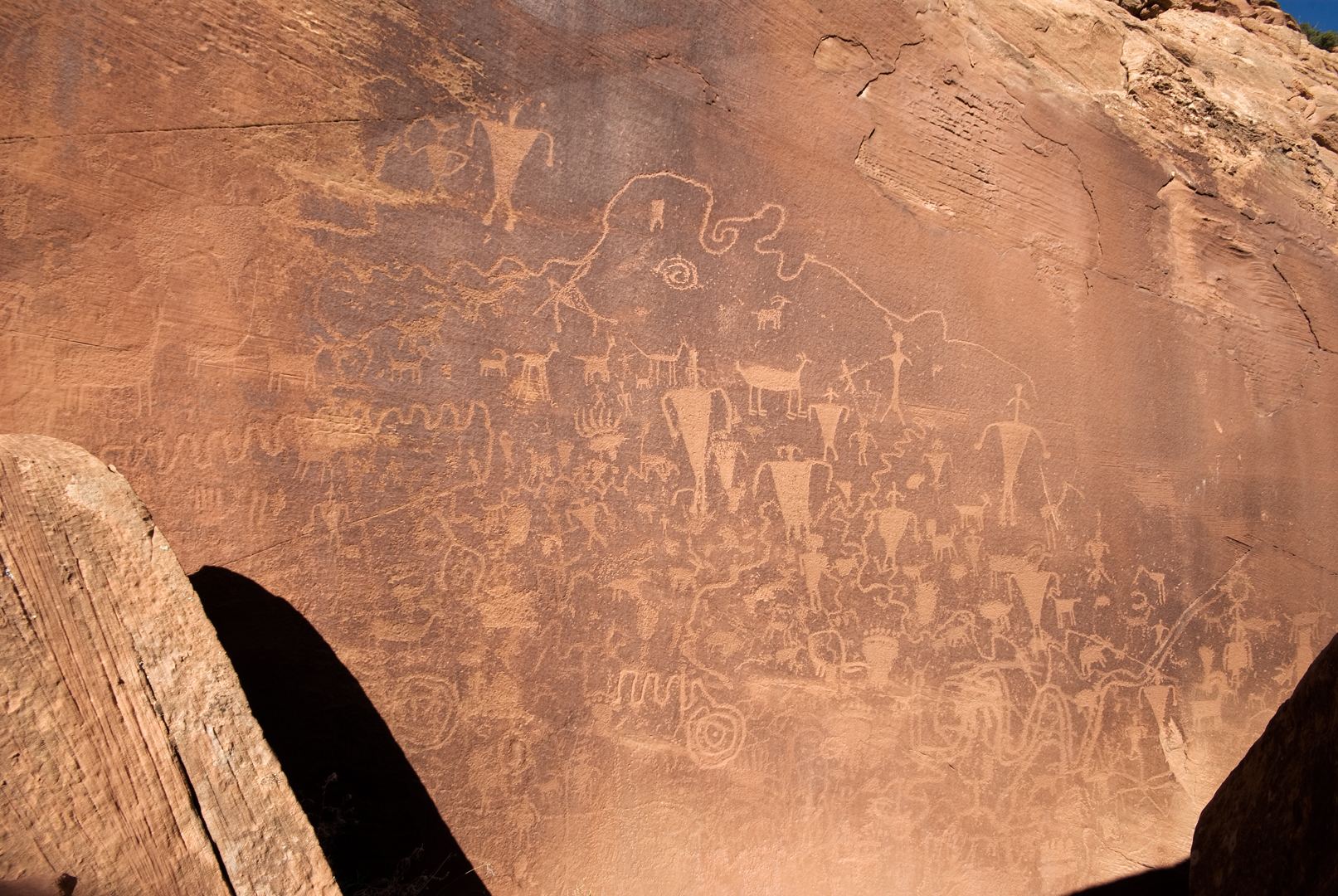
Large sandstone wall crowded with petroglyphs of broad-shouldered Ancestral Puebloan figures, animals, wavy lines, and spirals

This photo and the next two are from Colorado.
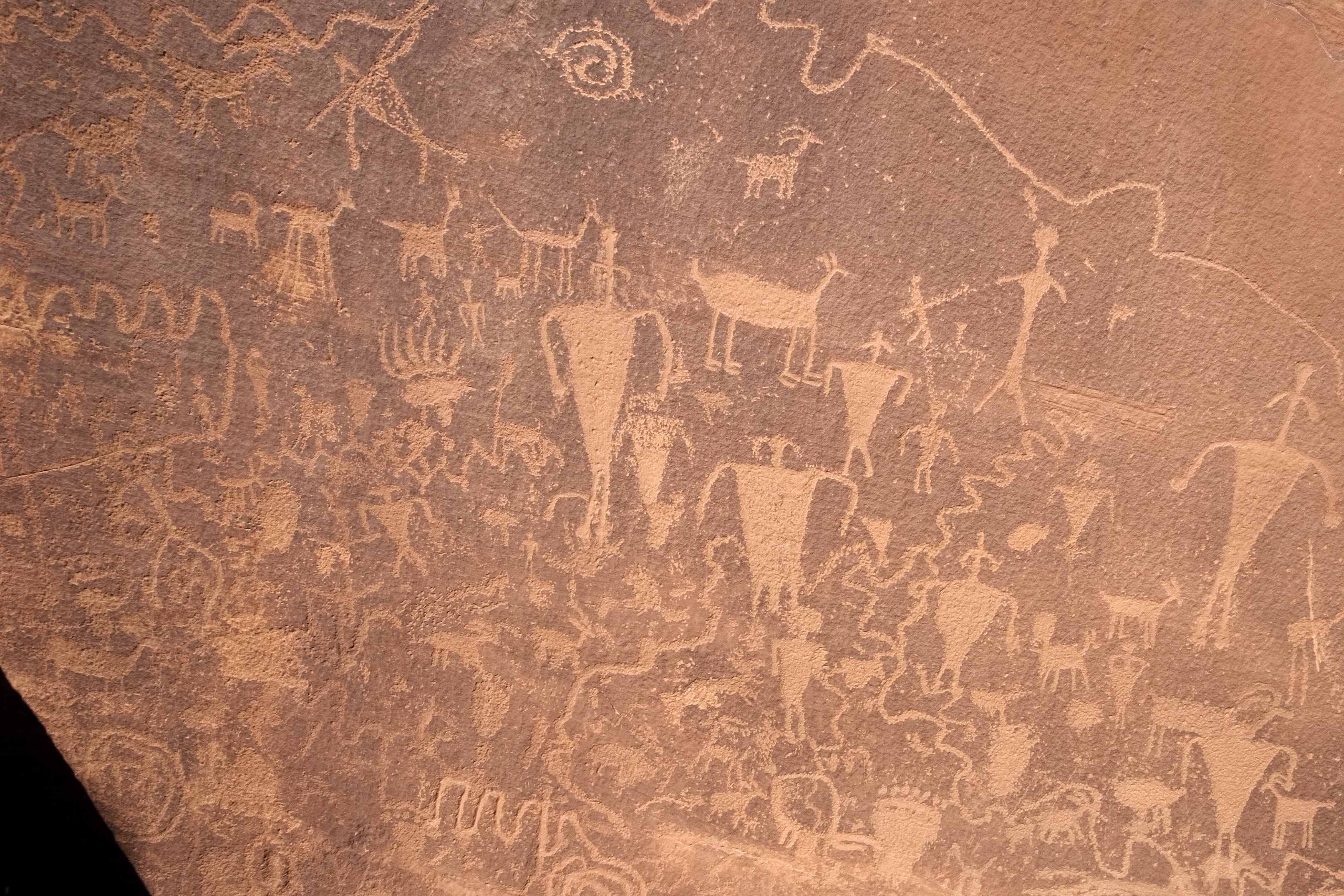
Closer view of the crowded petroglyph panel with broad-shouldered Ancestral Puebloan figures, four-legged animals, a spiral, and long wavy lines

Tall sandstone wall below a shadowed ledge, covered with faint petroglyphs of bighorn sheep, deer, broad-shouldered figures, and wavy lines

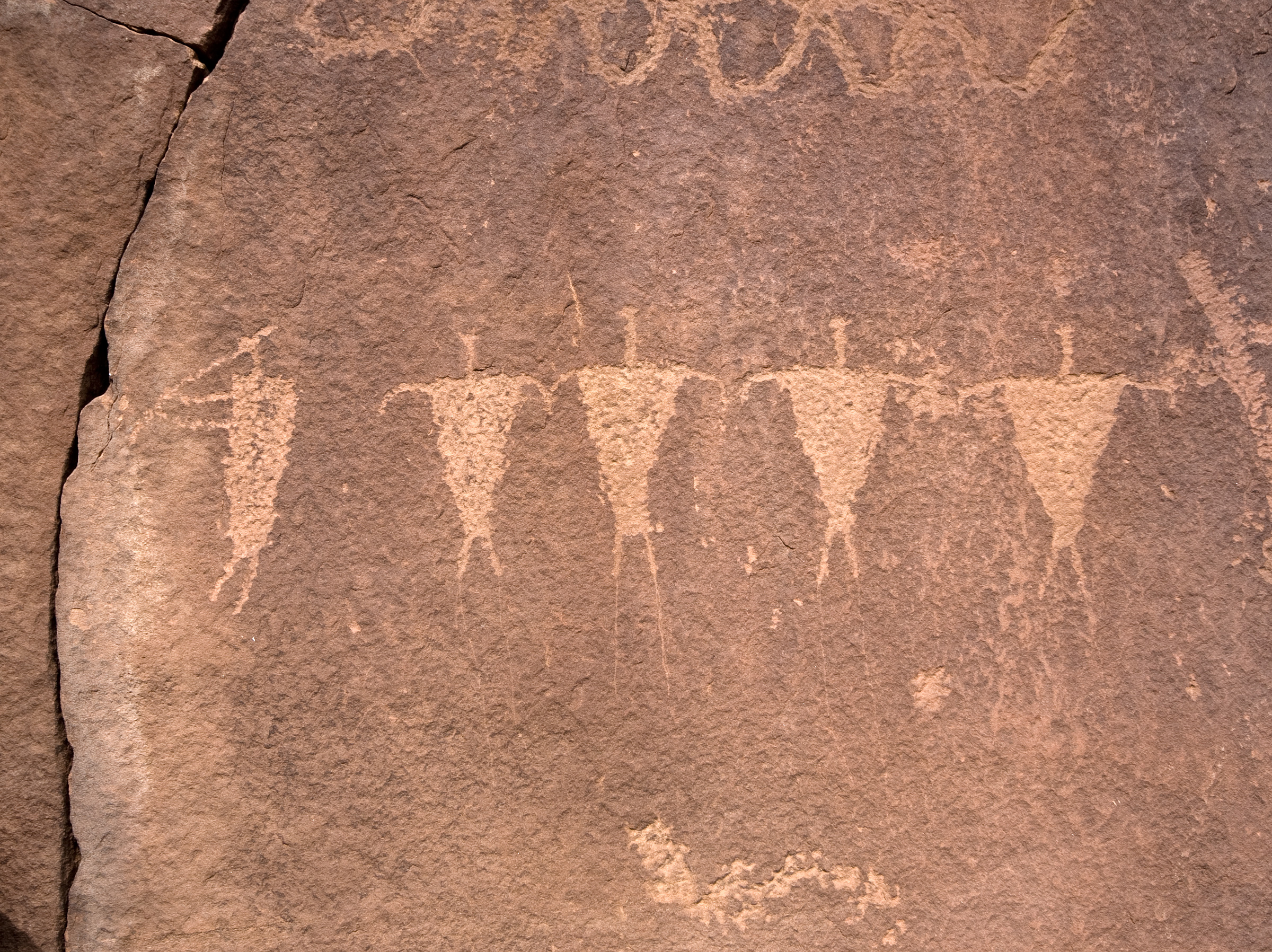
Row of five broad-shouldered, triangular-bodied Ancestral Puebloan figures pecked into dark sandstone below a wavy line

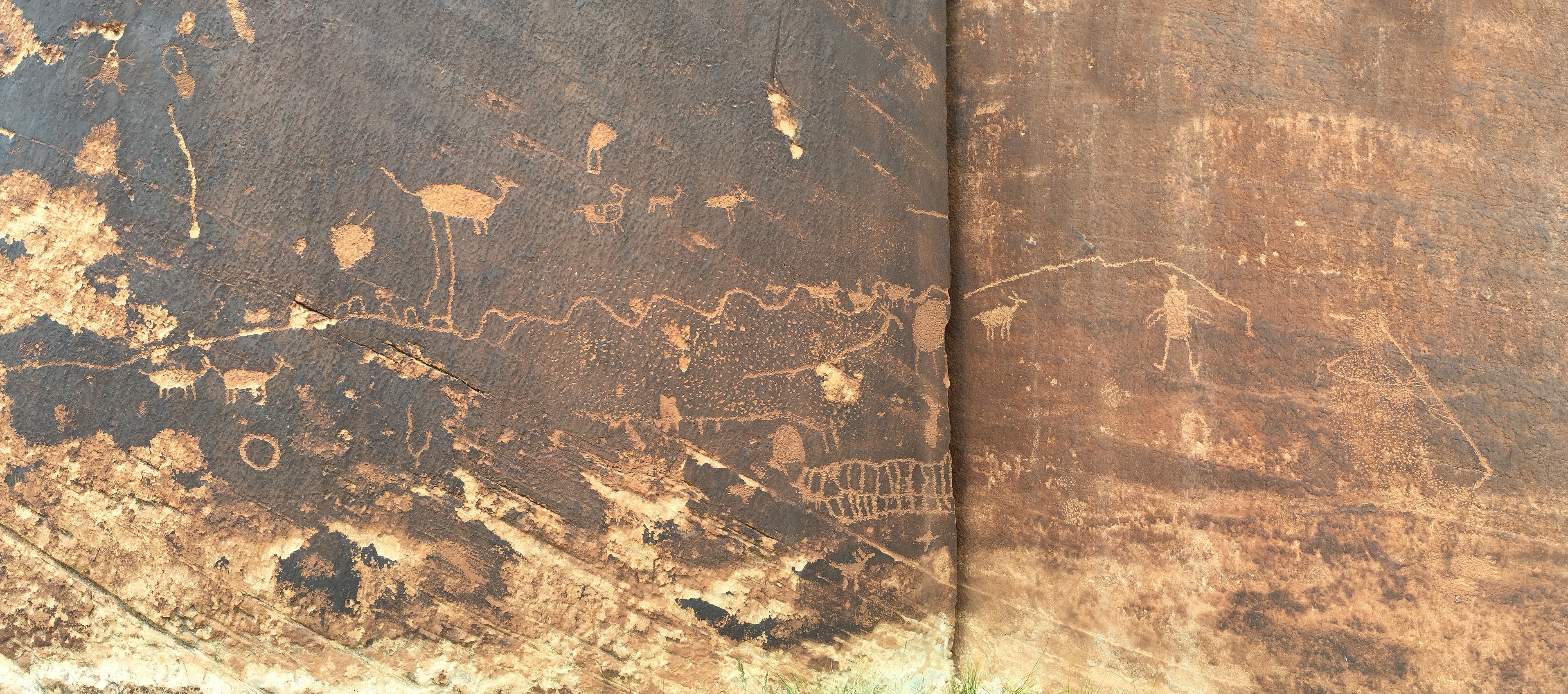
Wide view of a dark varnished cliff with petroglyphs of long-necked animals, bighorn sheep, a long wavy line, a grid, a human-like figure, and a large stipple-pecked flute player

The large figure at the far right is a flute player. It’s so unusual that its style is hard to define but it’s almost certainly Ancestral Puebloan.
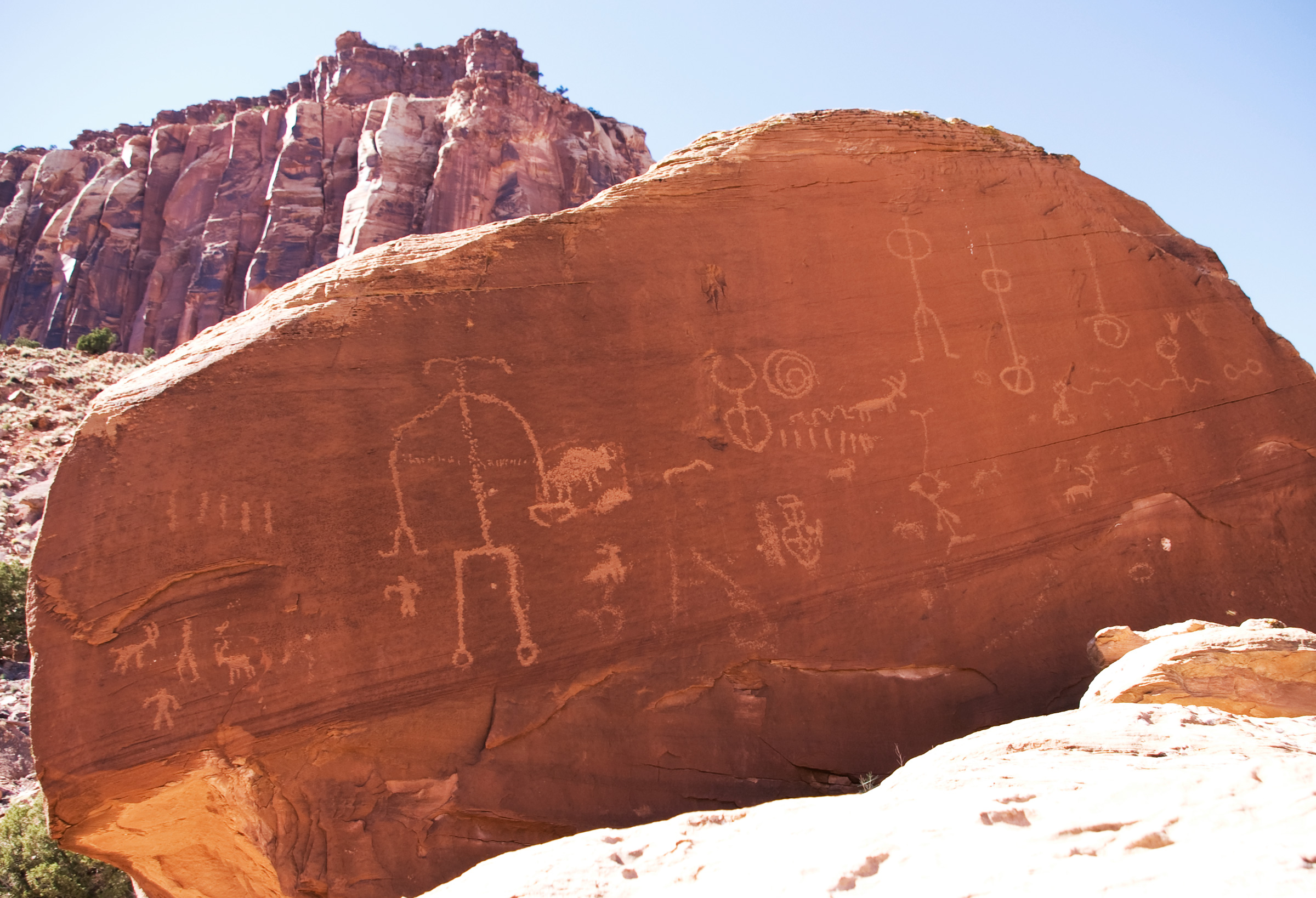
Large red sandstone boulder below a cliff, covered with pale petroglyphs of tall stick-like human figures, a bison, bighorn sheep, spirals, and rows of short lines

This may be Abajo-La Sal style since it’s in the right area and doesn’t look Basketmaker. There could be Ute forms here too.

Back to all galleries