
Ancestral Puebloan Art
The Ancestral Puebloans, once called the Anasazi, lived in the Four Corners region for over a thousand years until about 1300 CE. They moved south and east to the Hopi mesas, Zuni, Acoma and the Rio Grande valley. They are the ancestors of today’s Pueblo peoples. Their rock art is both pecked and painted and often found near dwellings and granaries and along canyon walls. It includes flute players, bighorn sheep, birds, spirals, handprints, faces, and shield figures. The panels in this gallery show a few of these themes.
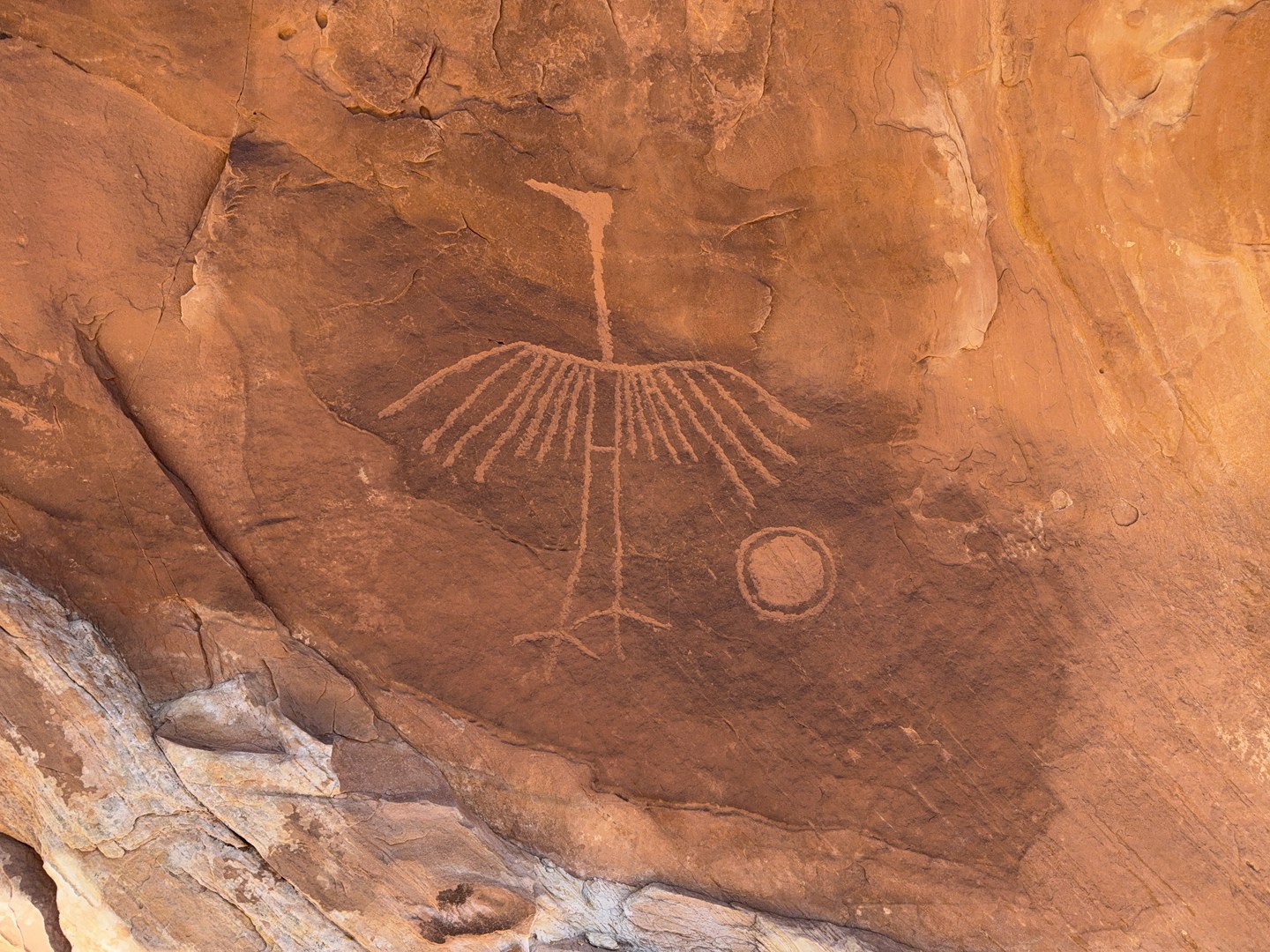
The Crane Panel.

Crescent moon over sheep and face.

Forms on this panel may be baskets, an atlatl dart, a staff, birds, animal prints, and the well-defined anthropomorph. The “light bulb” forms on the right are seen on many Ancestral Puebloan panels in the area and no one has any idea what they represent.
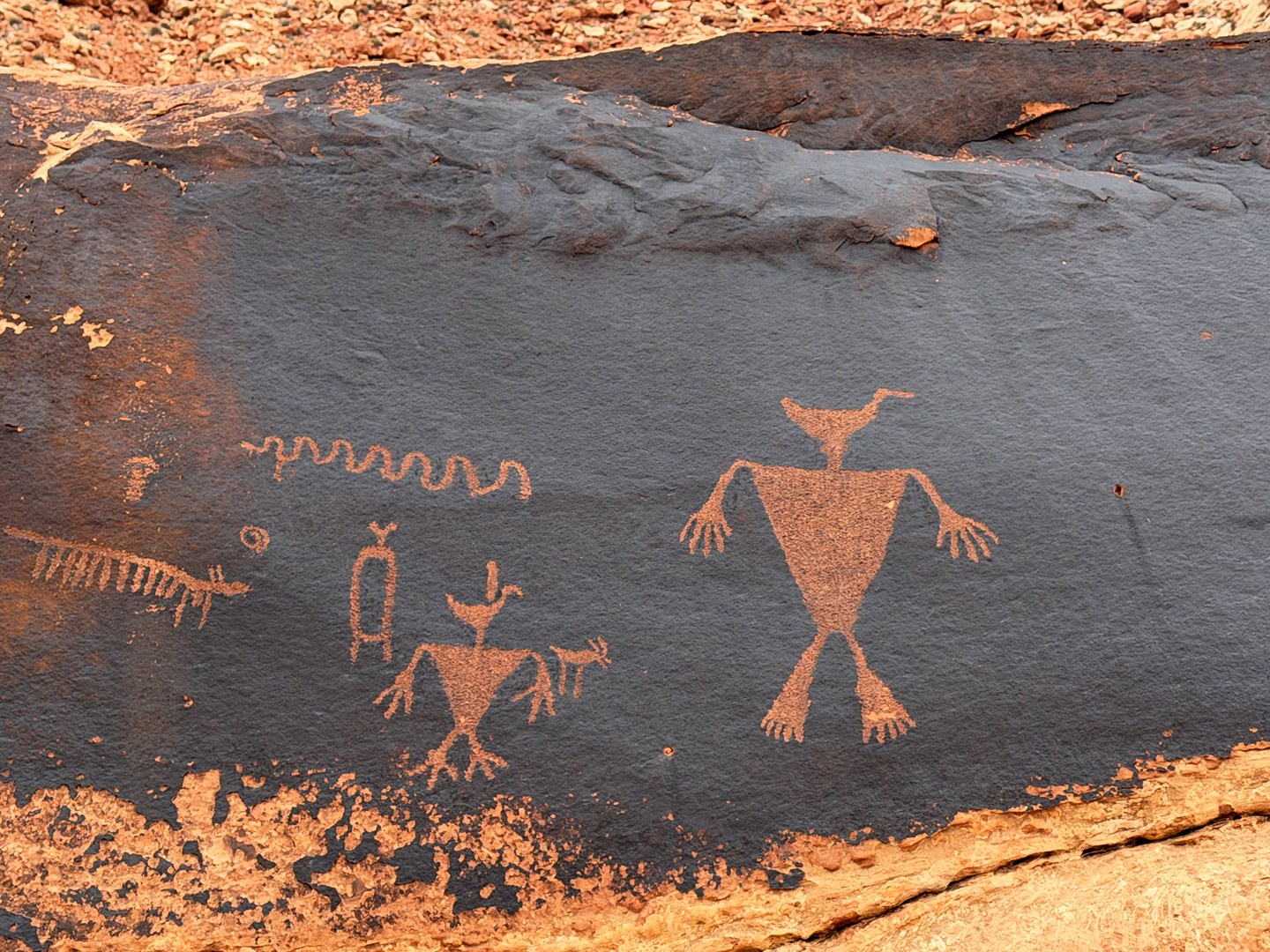
There are a lot of human-like forms with a bird head in this area but this is the largest and best of them I’ve seen. I have always assumed the birds were ducks but archaeologists won’t make that claim. It’s possible this is a clan symbol.
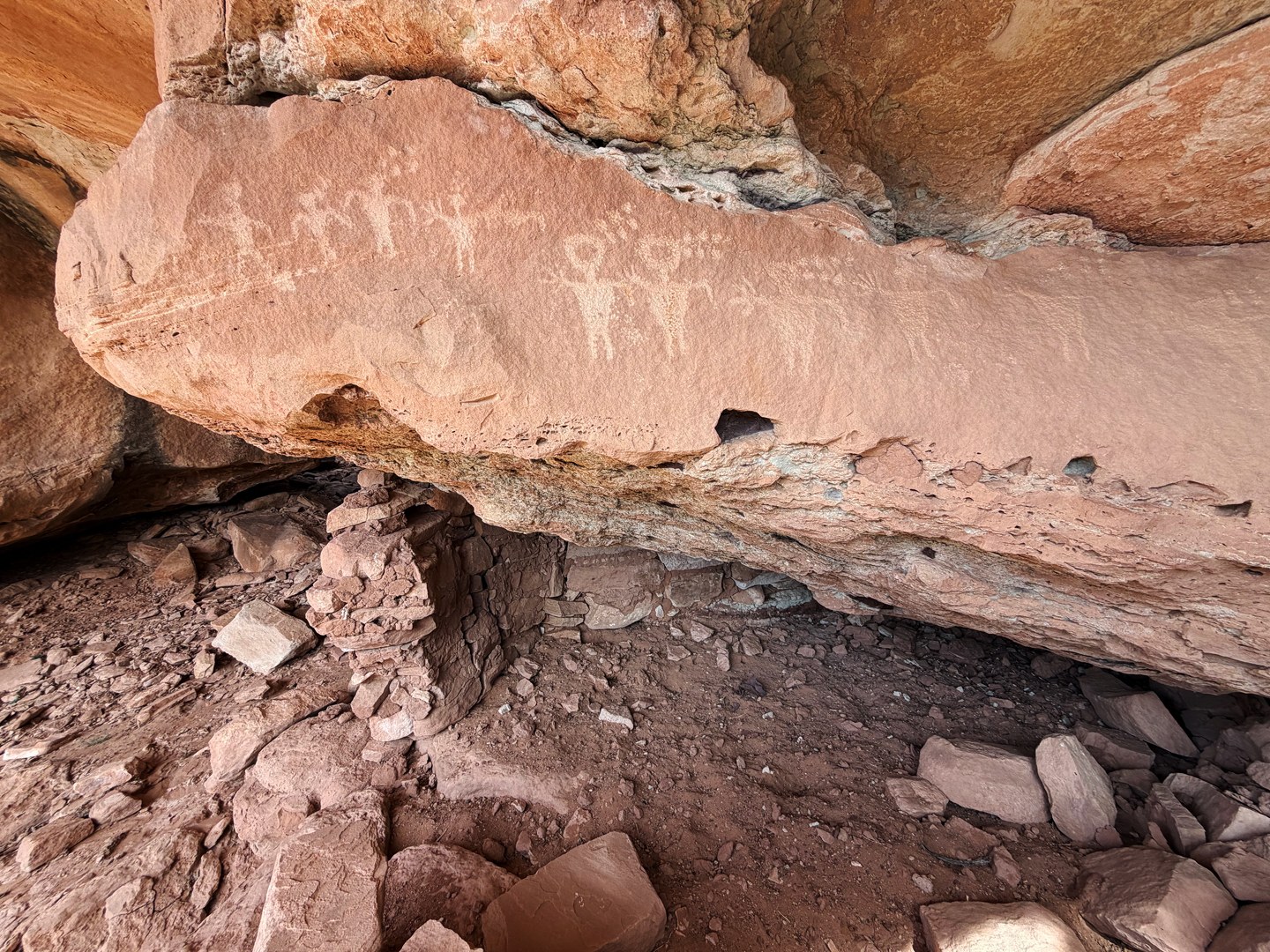
Twins. These are pecked on what appears to be an old dwelling or storage area.