
Canyonlands Faces Panels
There are a dozen or more distinctive Canyonlands Faces Motif panels in and near eastern Canyonlands. These Ancestral Puebloan figures are usually painted in groups or rows and are decorated with bandoleers, kilts or aprons, necklaces, headdresses, and hair in bangs or whorls. Some, especially the Five Faces and Four Faces, closely resemble the Fremont Pilling Figurines, small unfired clay figures about 1,000 years old found in Range Creek, Utah. Sally Cole believes the two are so alike that they must have been made by closely related groups, perhaps people who moved between Canyonlands and Range Creek.
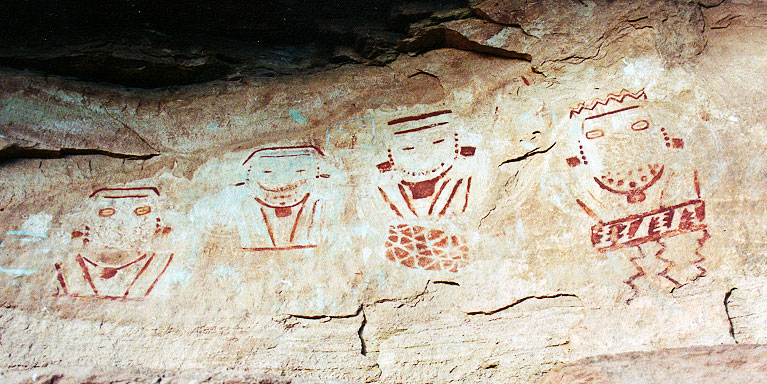
The Four Faces panel. This panel sits in a small ruin near the All American Man panel. Blue pigment from an earlier set of faces is still visible.
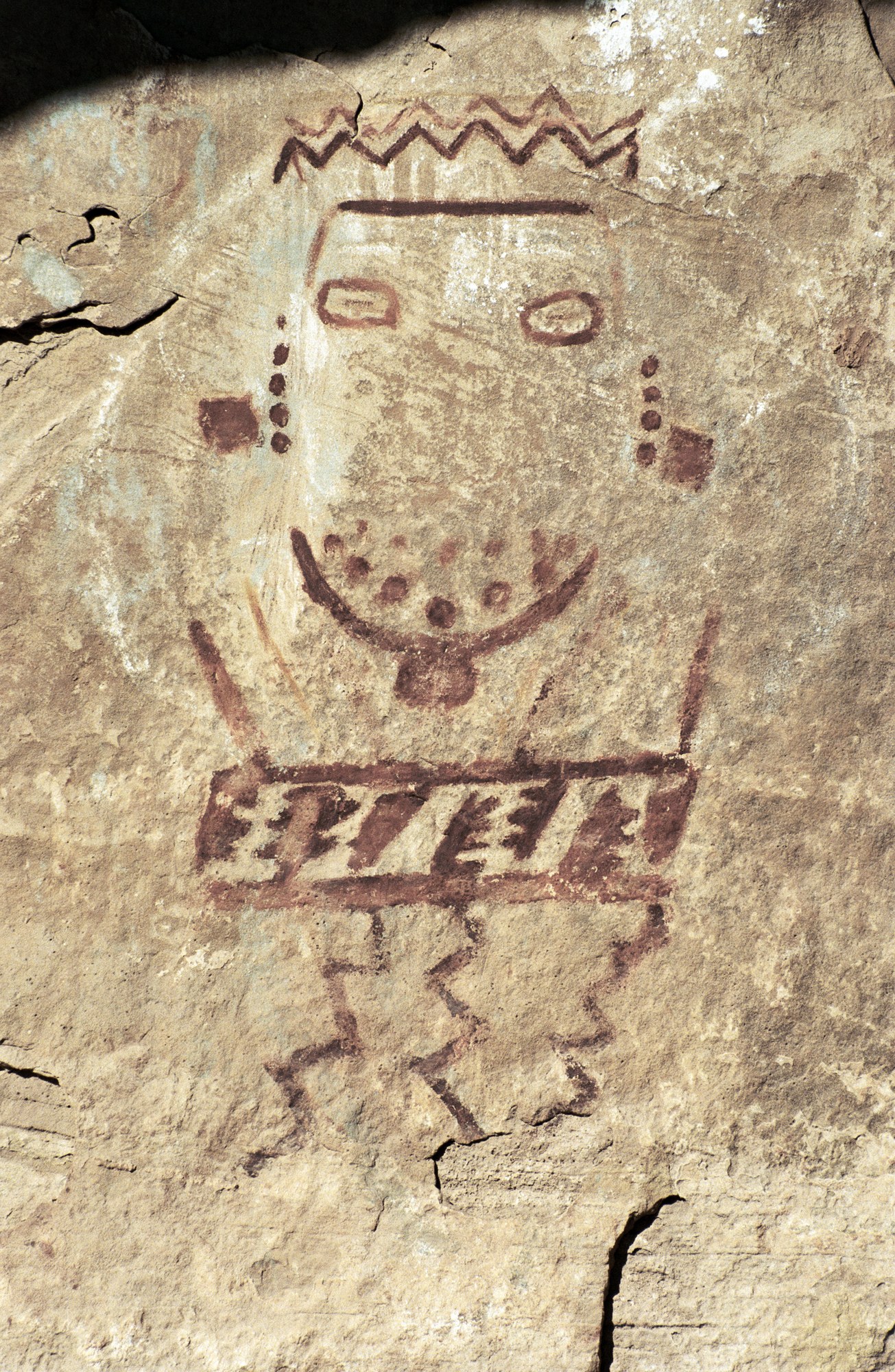
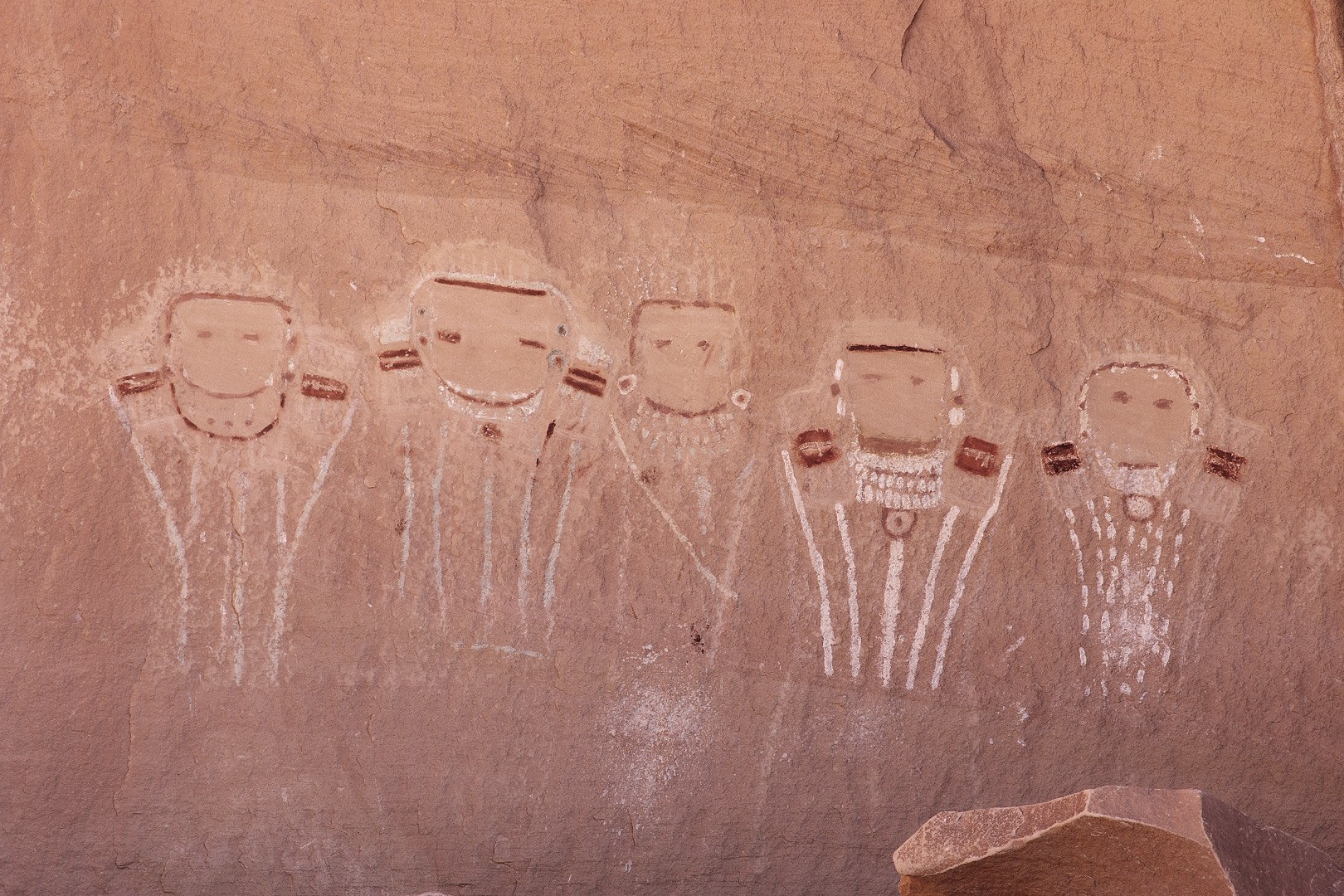
The well-known Canyonlands Five Faces panel. This panel is situated partway up the wall of a small alcove. You generally view it from the other side of the alcove, about 30 feet / 10 meters away, unless you want to walk a narrow ledge. It is best seen in the morning or late evening when the sun is not on it. Note how the artist scraped the rock before painting the faces.
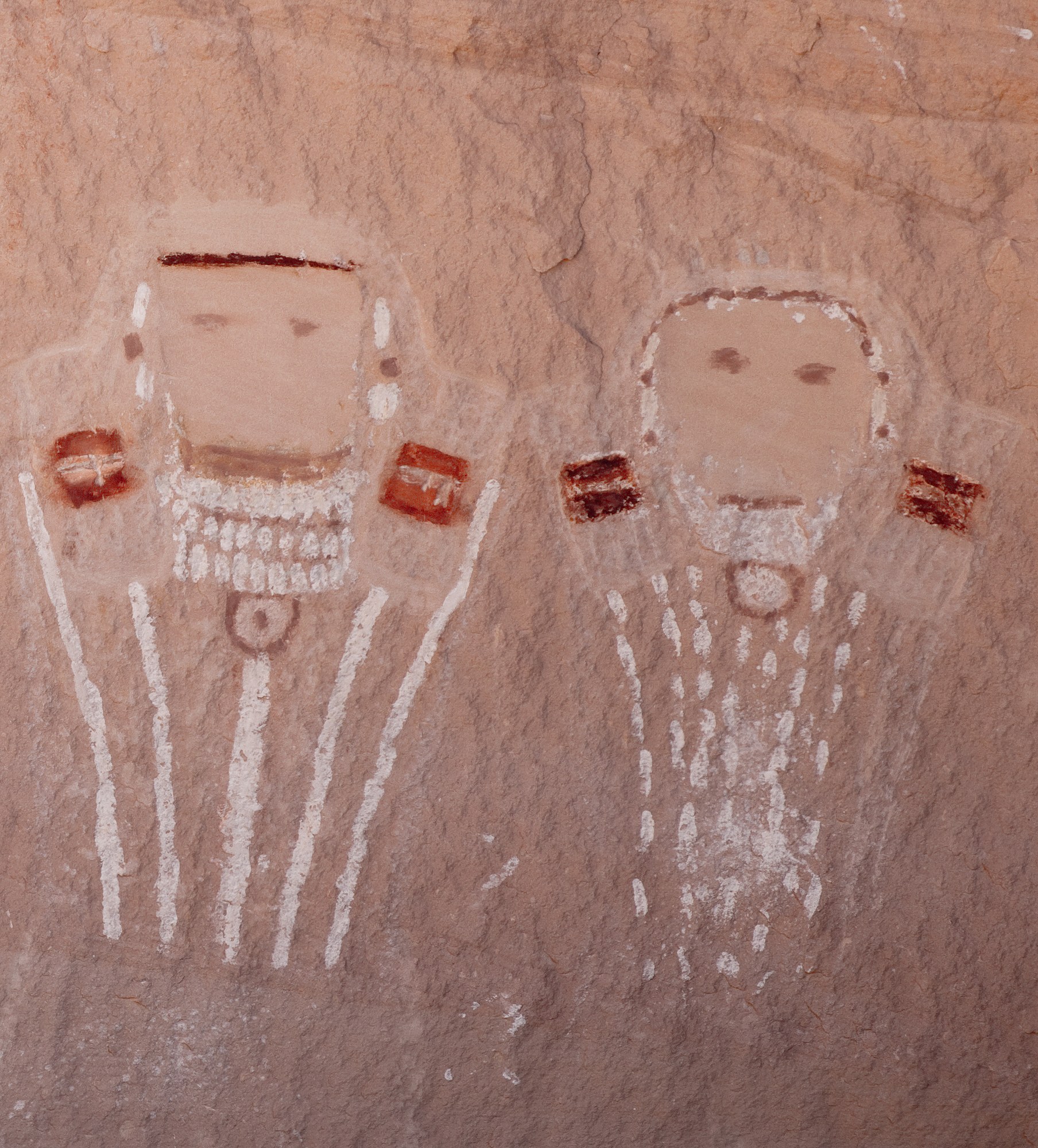
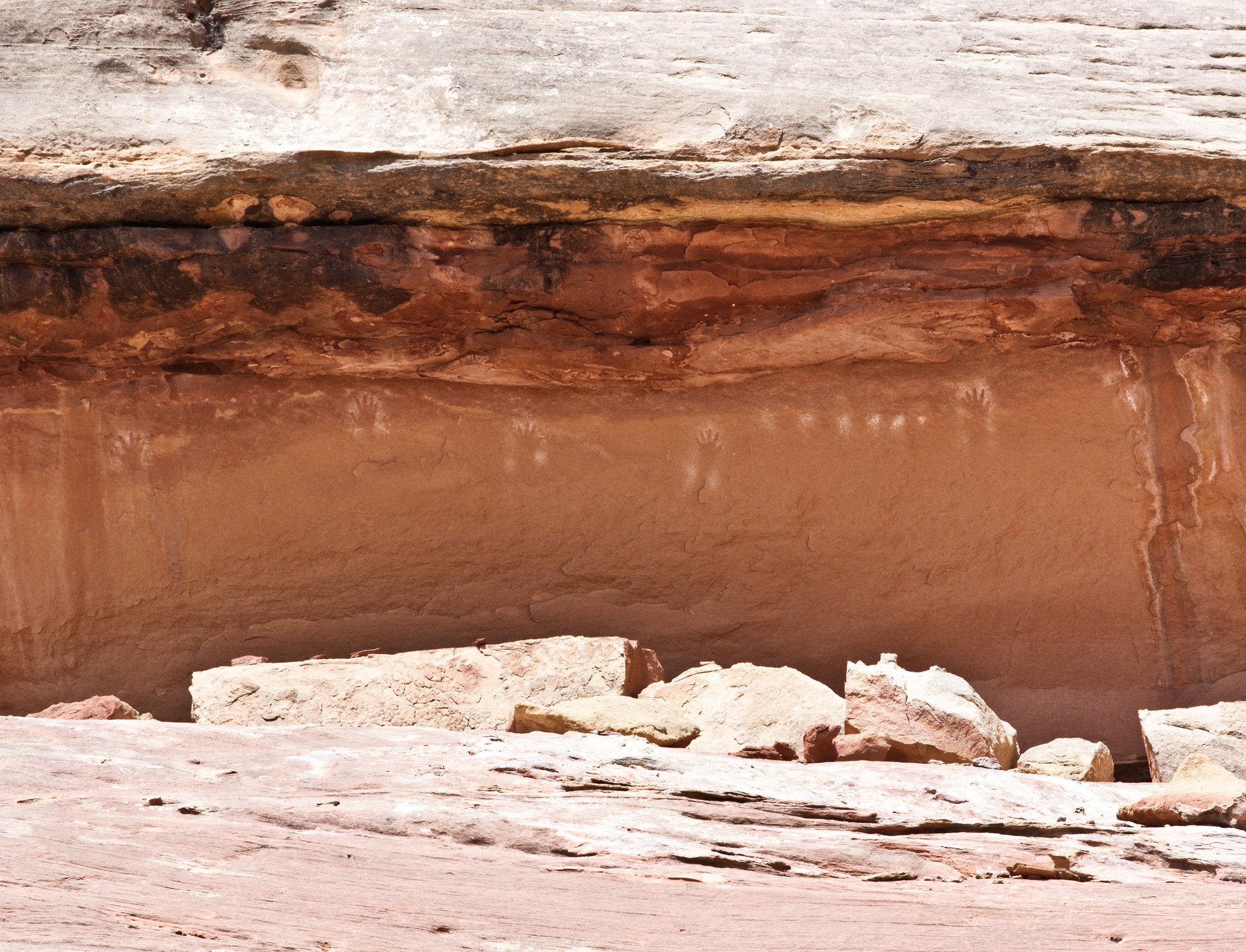
These easy-to-miss handprints are up above the Five Faces panel.
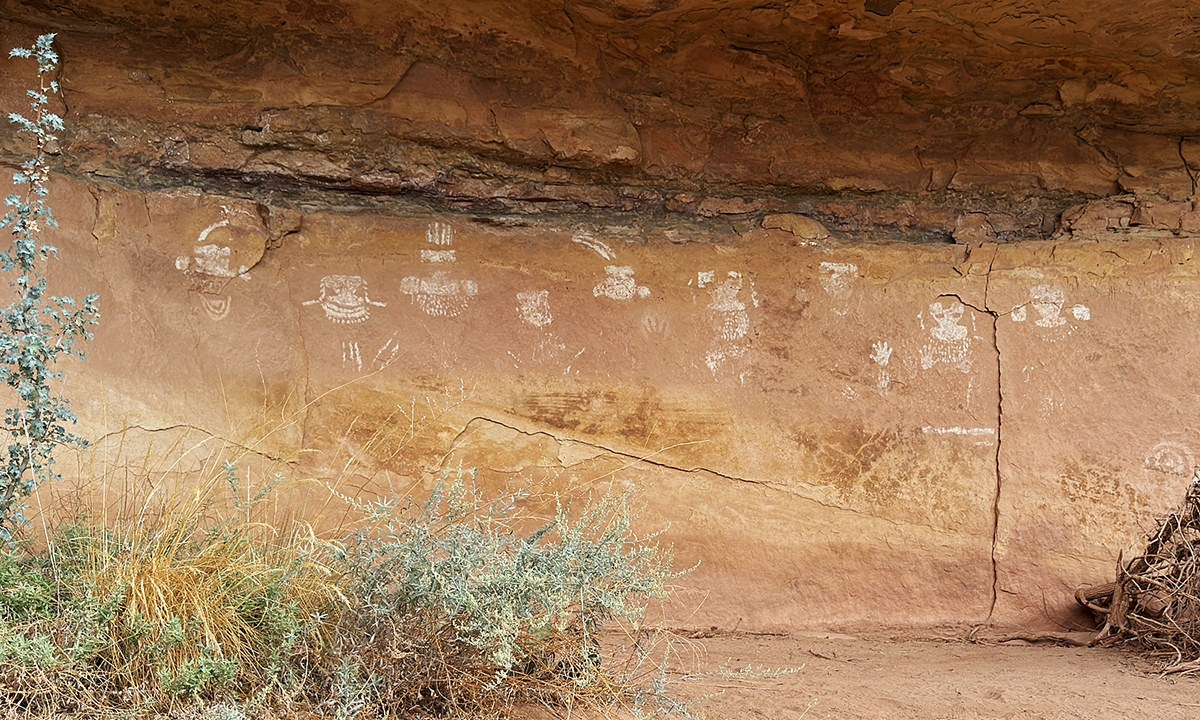
The Nine Faces panel was placed close to the bottom of a side canyon, much like Thirteen Faces. Any other colors have likely faded, leaving only the white paint that gives the panel its other name, the White Faces.
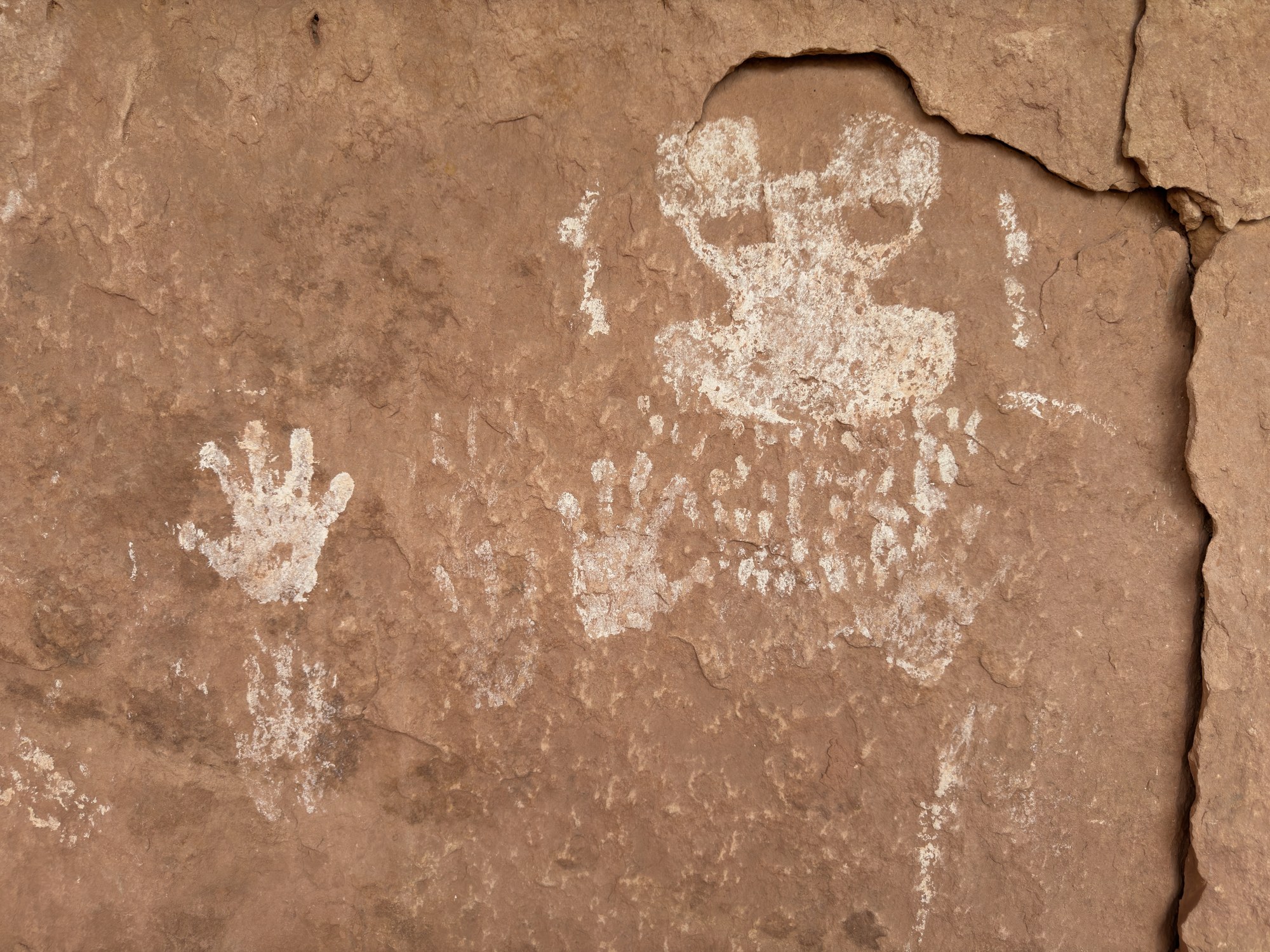
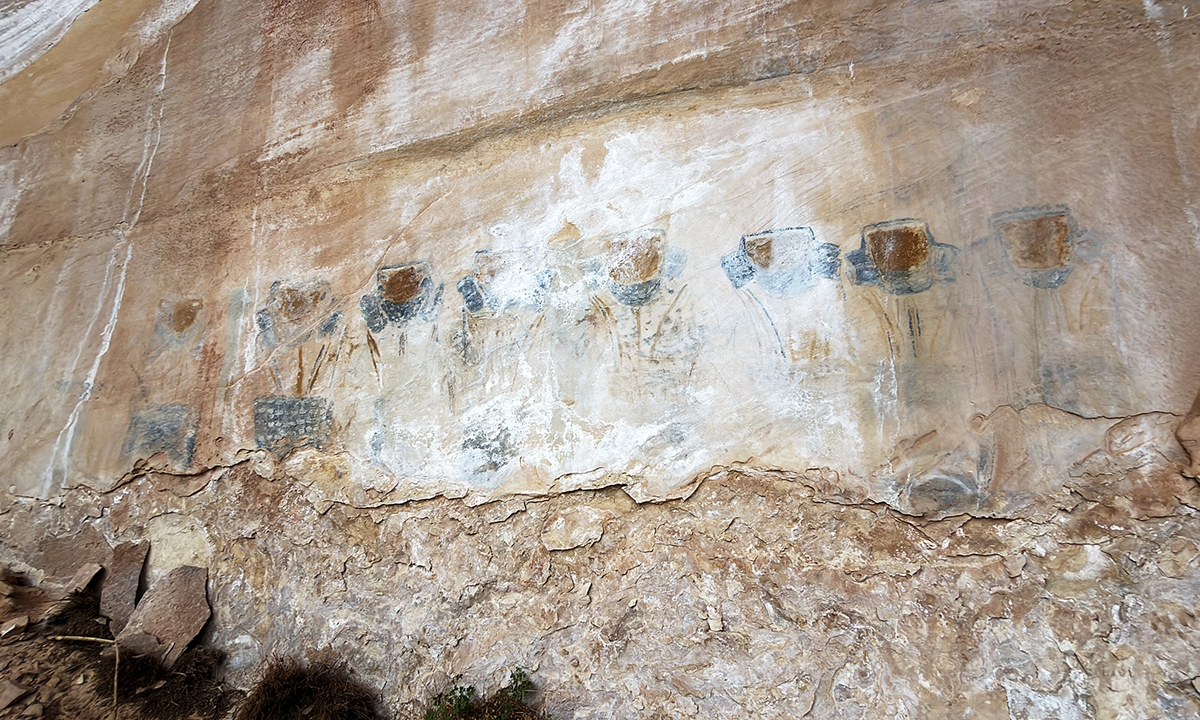
The Eleven Faces panel, also known as the Blue Faces, sits high up a talus slope near the top of a cliff. Only eight faces remain visible, some still showing their gray-blue paint.
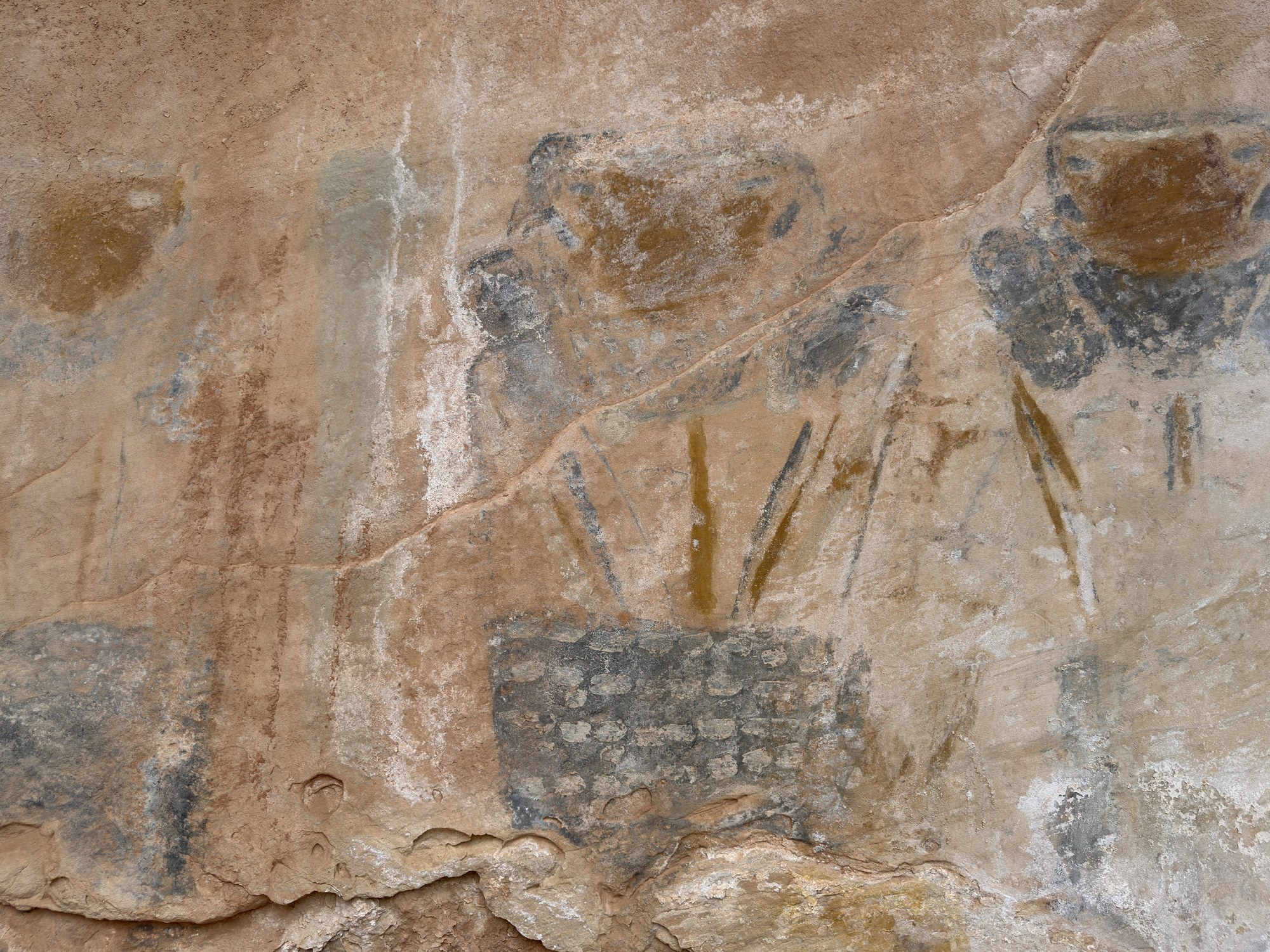
Move your cursor over the photo (or tap it on a phone) to see an enhanced version.
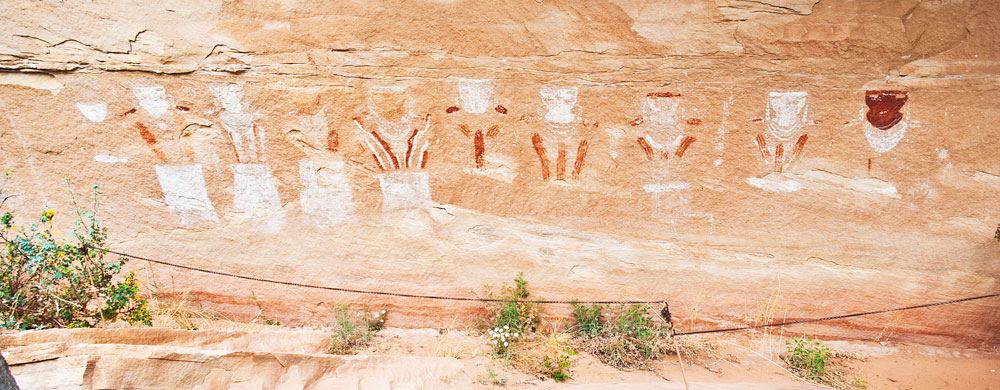
The Thirteen Faces panel. A flood reputedly washed away three of the faces.
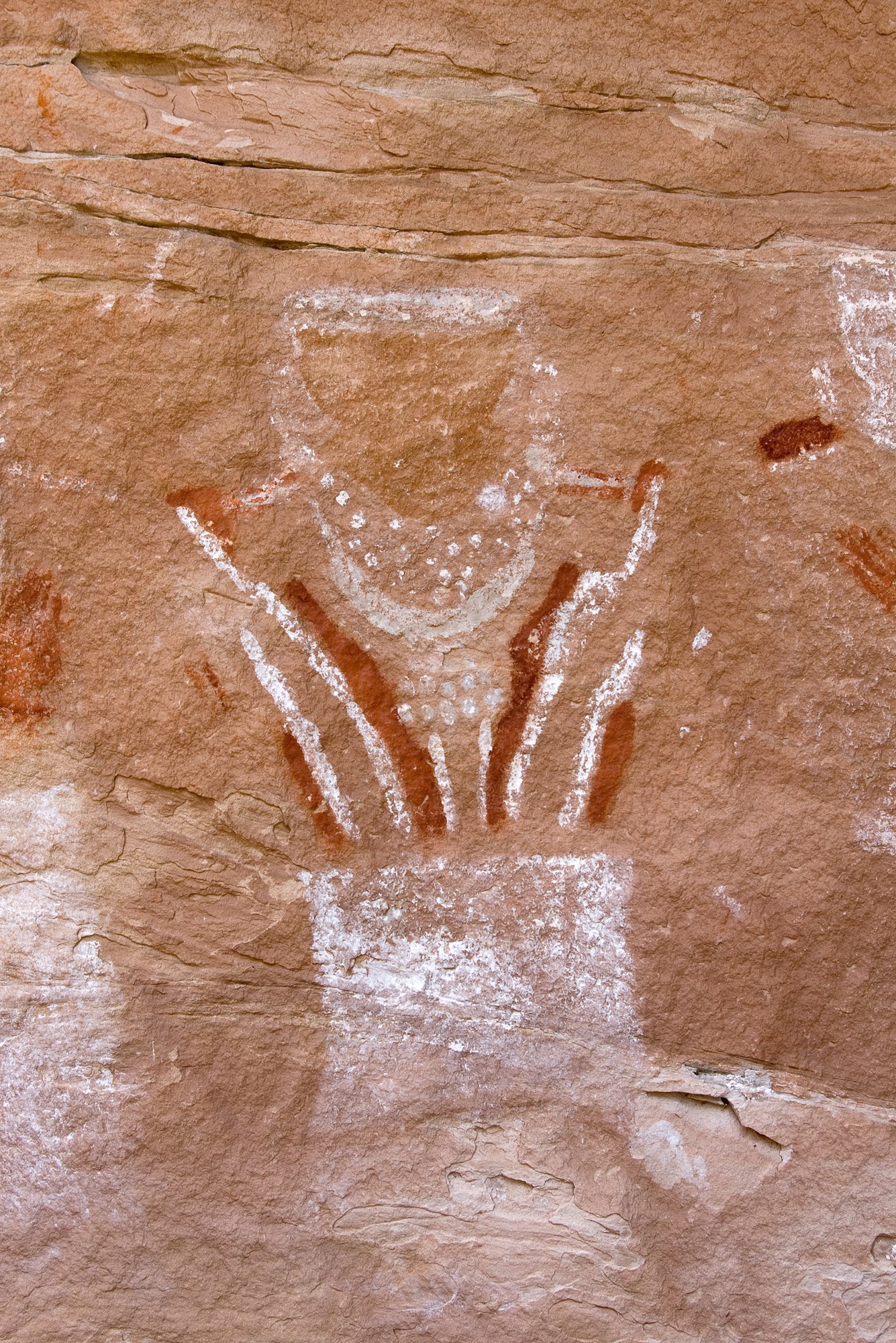
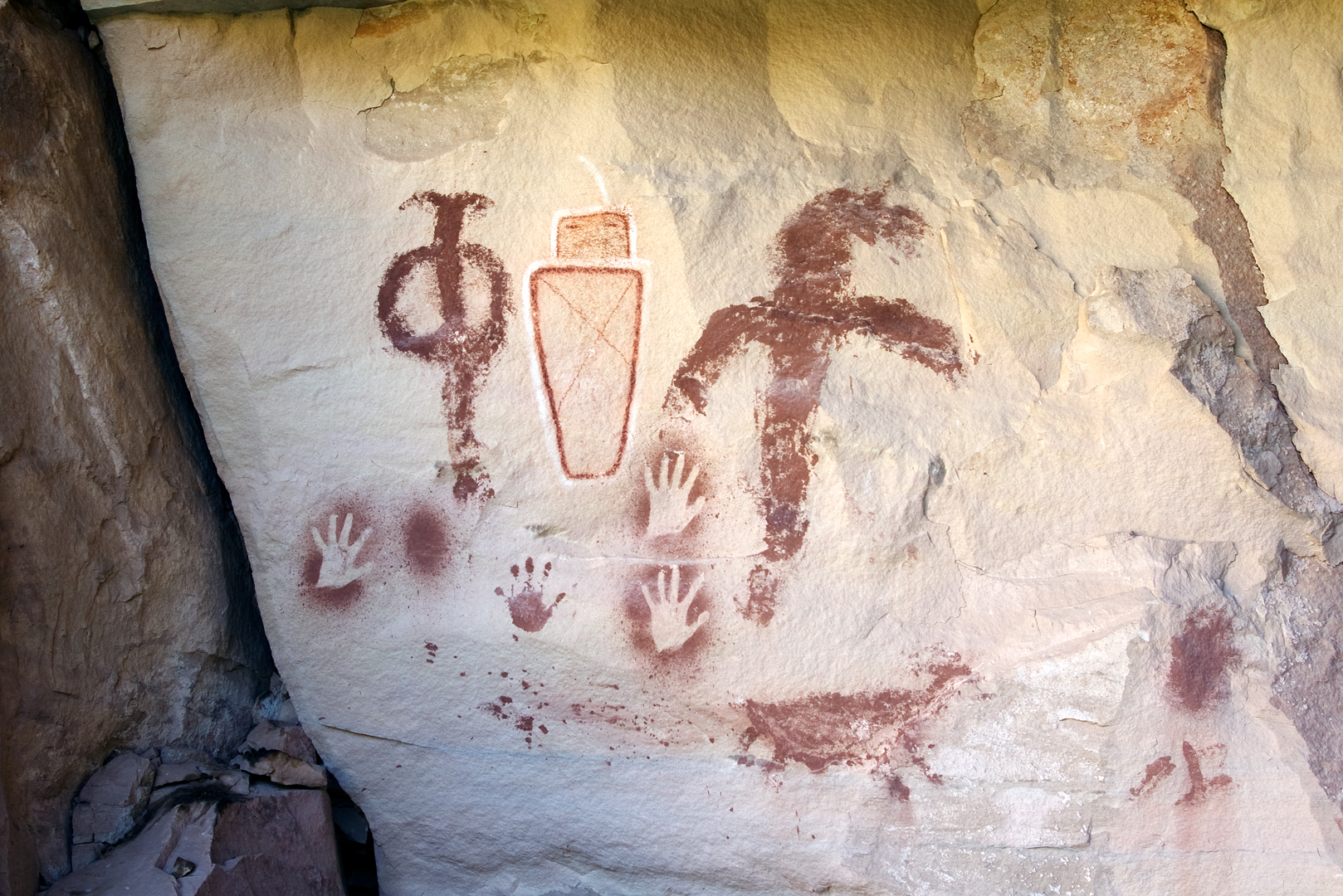
I call this the Lone Face Panel. It’s not one of the Faces panels, just a face-like form in eastern Canyonlands that didn’t make the group photo.