
Fremont: Individual Panels
The Fremont lived across much of Utah from about 300 to 1300 CE. They farmed corn but still hunted and gathered. Fremont figures typically have trapezoid bodies with horned headdresses and necklaces, often with bighorn sheep nearby.
Each photo here is from a different site. The other Fremont galleries each show a single site or theme.
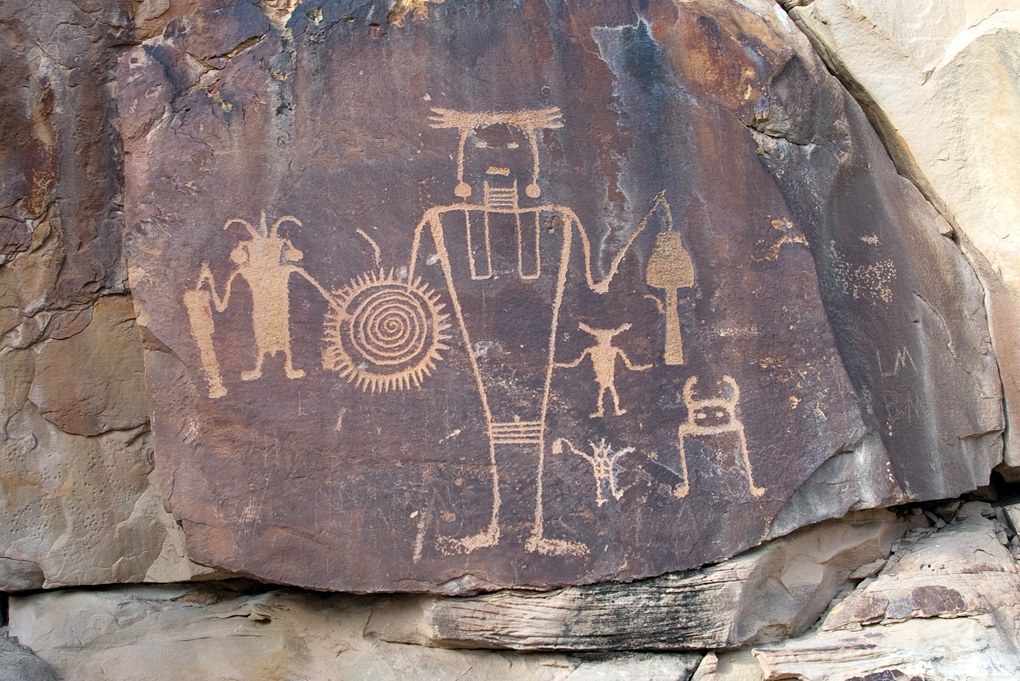
This warrior holds a spiral shield and possibly a scalp or head.
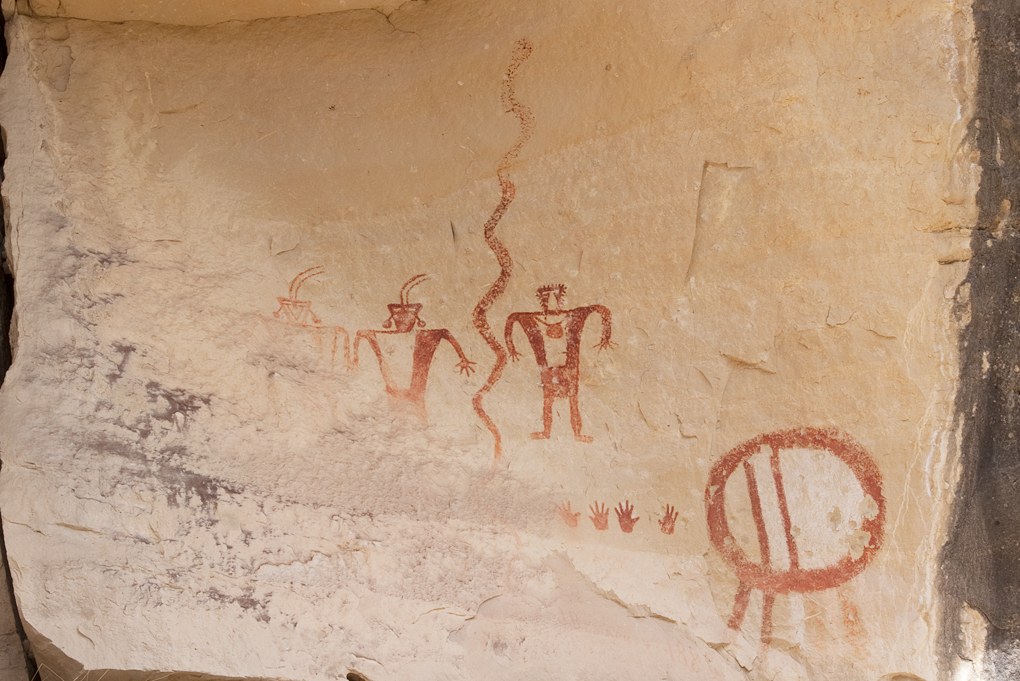
Snakes are common in the Barrier Canyon Style, handprints are commonly Puebloan, and both are on what seems to be a Fremont panel. The form on the lower right appears to be a shield. It shares the red used across the panel but also has white paint, the only white pigment here.
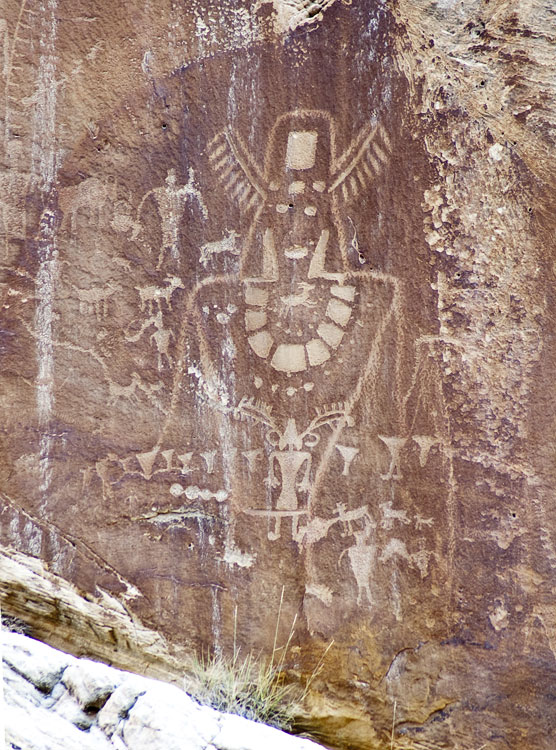
The larger figure was pecked over the top of other forms.
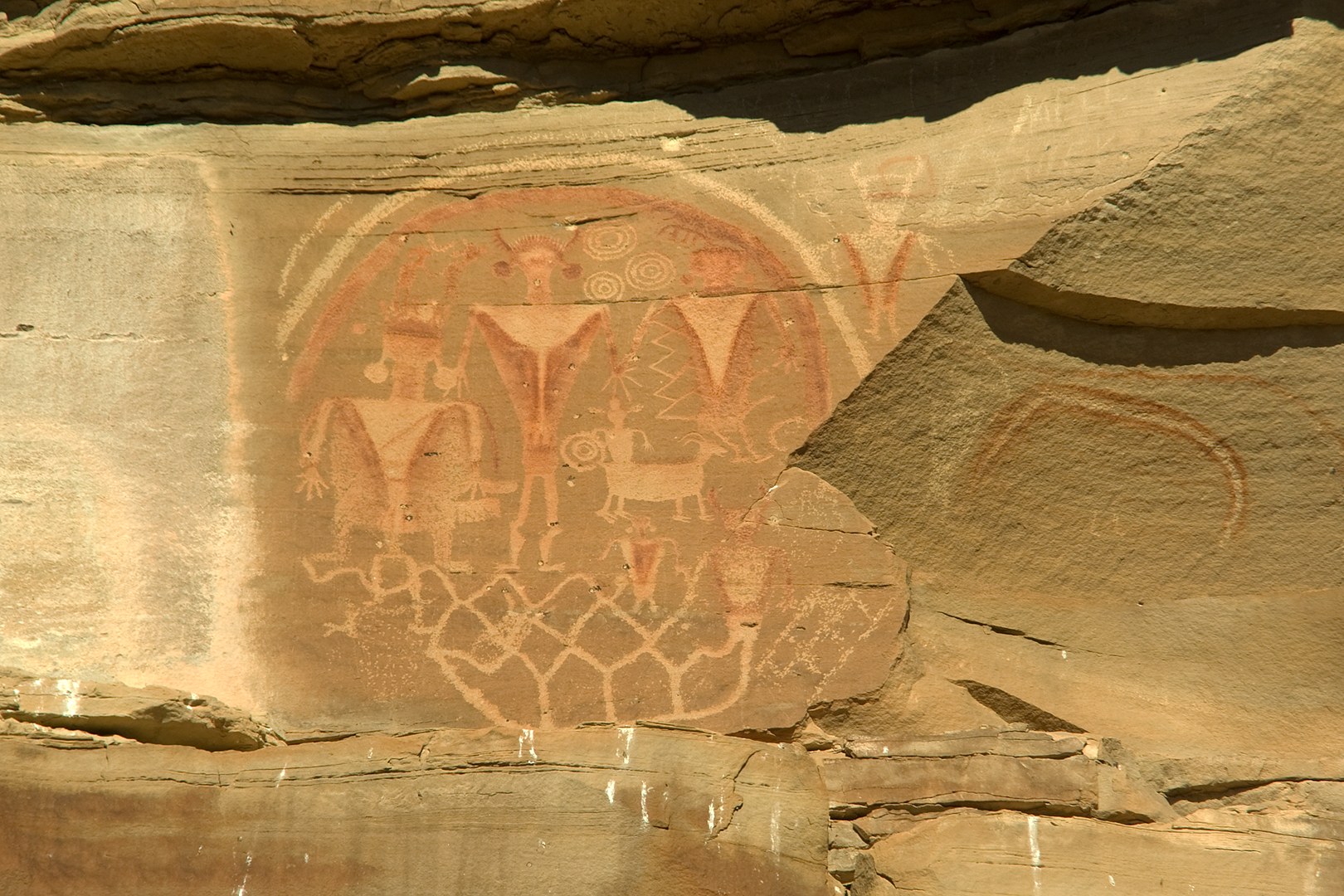
The panel sits above the banks of a small river and the form at the bottom may be a net. The three arcs at the top could represent a rainbow and therefore water. The three sets of concentric circles under the “rainbow” could represent water too, like the ripples from a stone dropped into a pond.
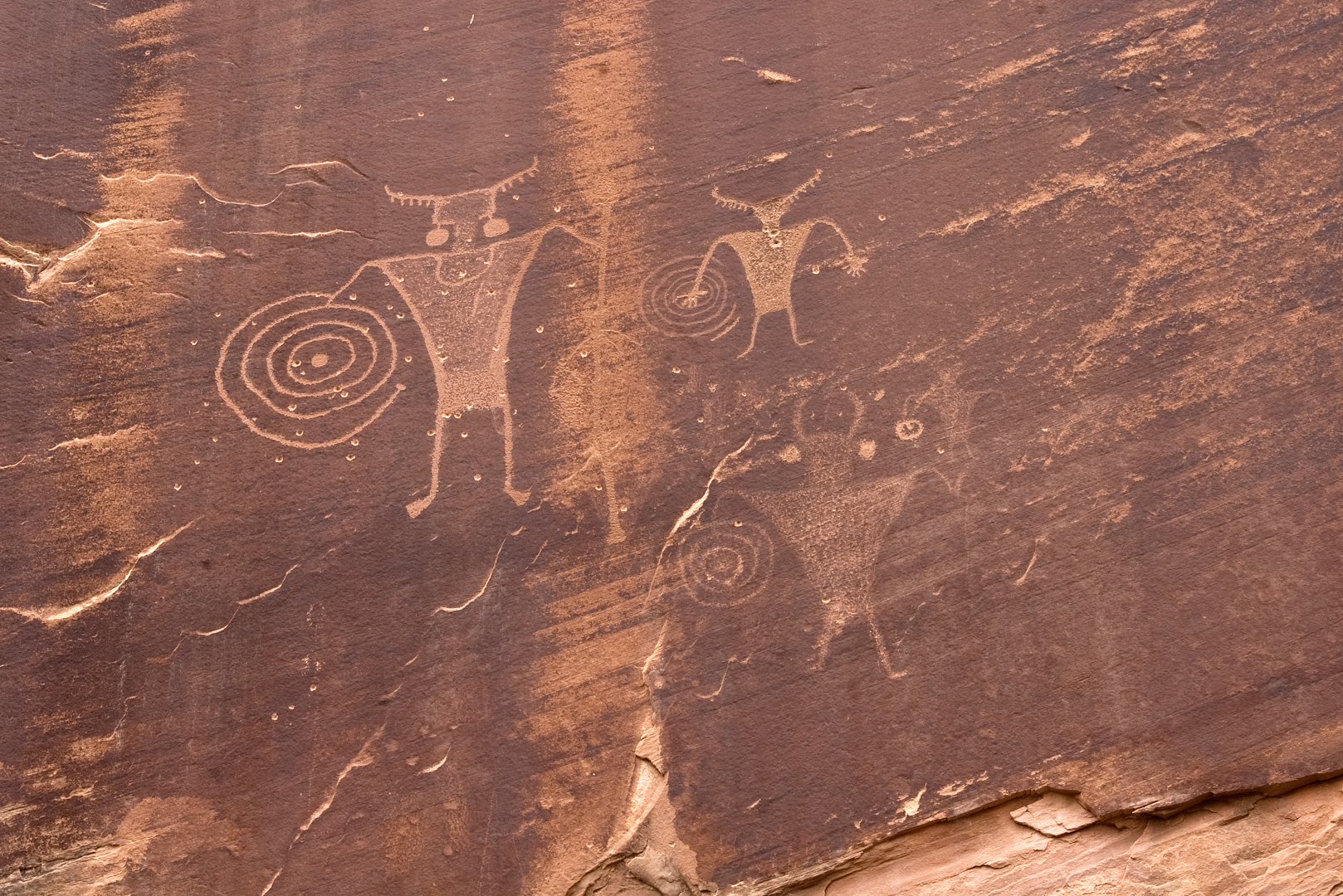
Figures are carrying shields and spears.

Fringed horn headdresses and footprints.

This panel is at a well-marked parking lot in Capitol Reef National Park.
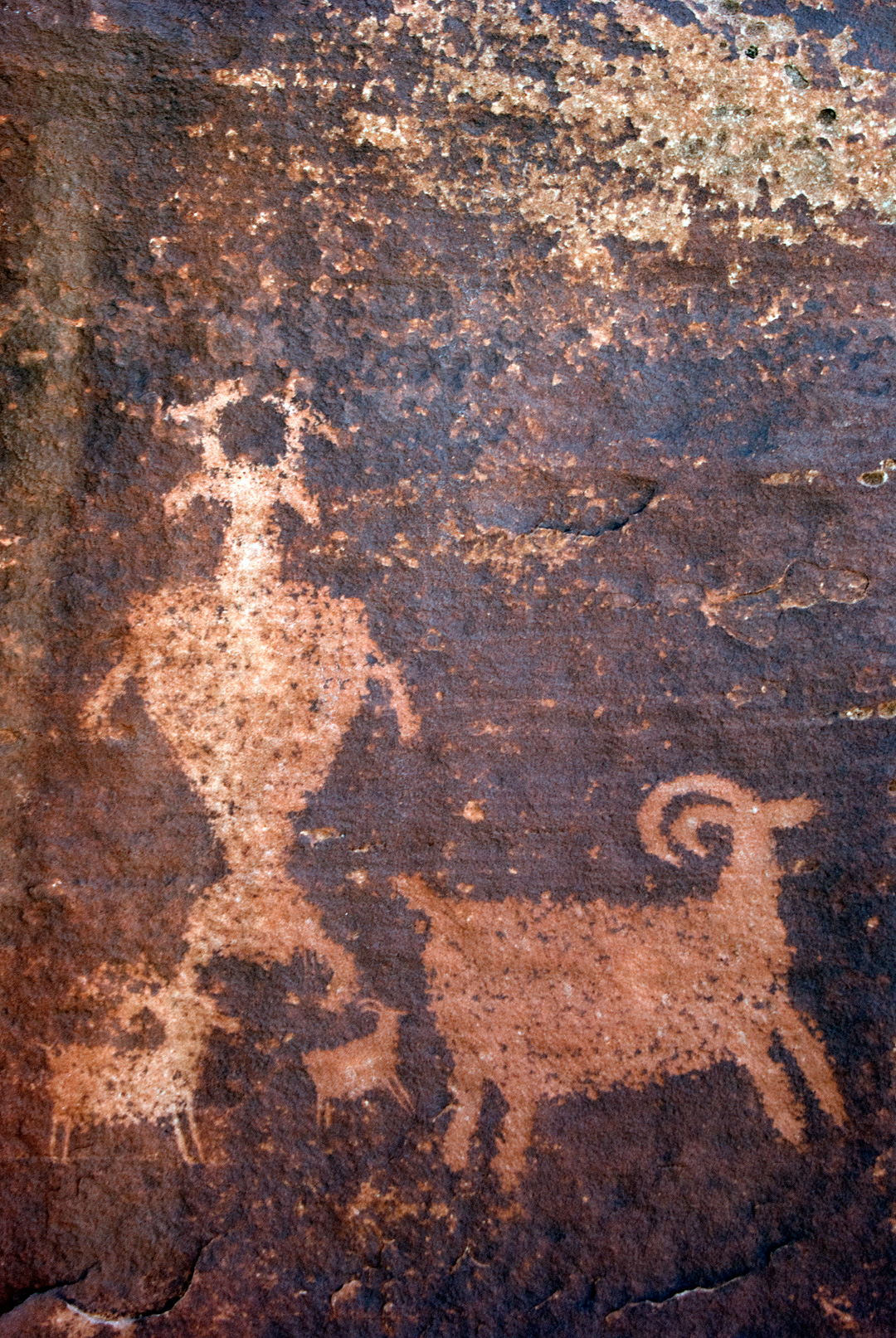
This is a classic Fremont image: a human-like figure with a pinched waist and a horned headdress. Beside it stands a bighorn sheep with curled horns, a favorite subject of Fremont artists.
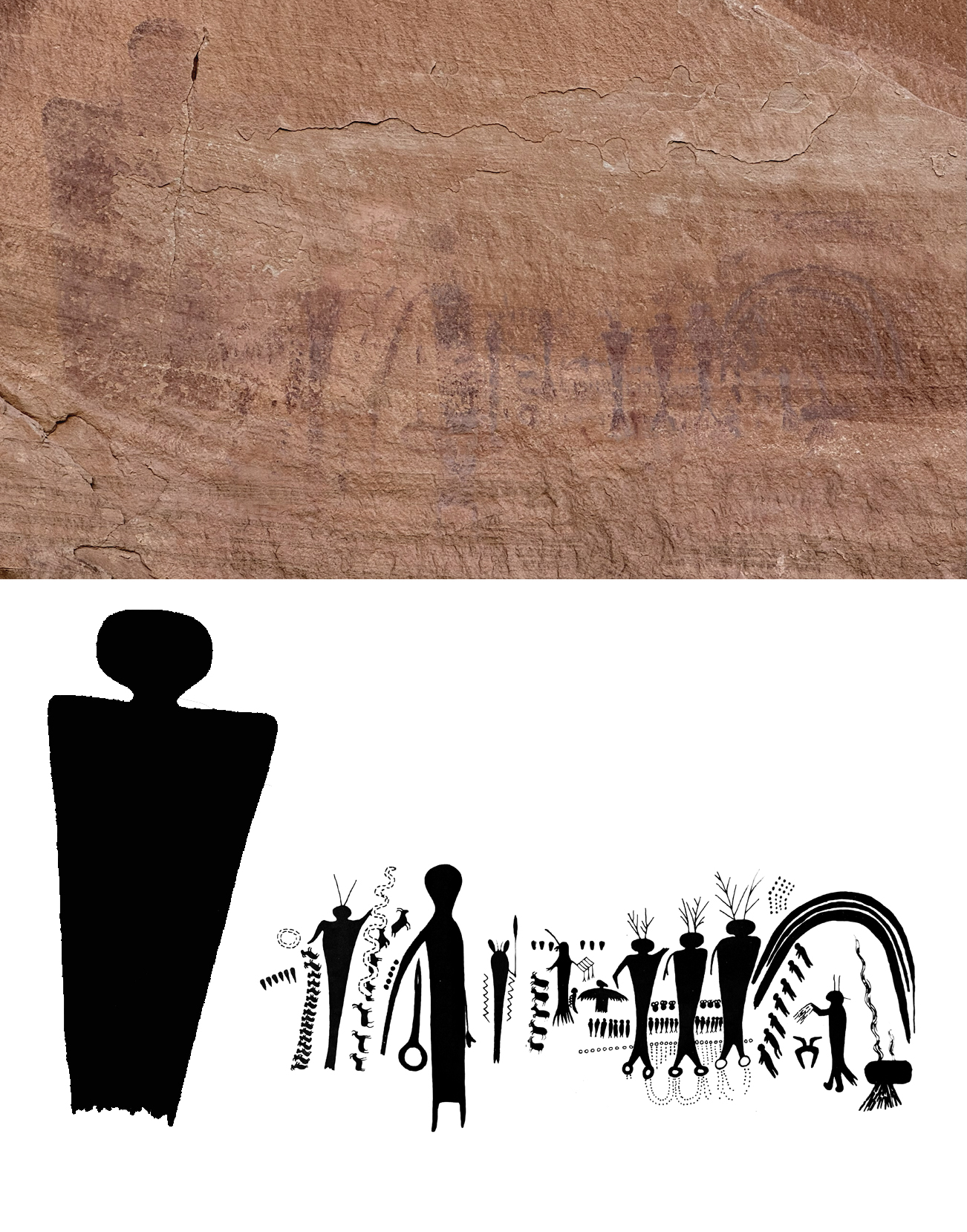
This outstanding panel has faded almost beyond recognition. The drawing below is from a rubbing made by archaeologist Steven J. Manning and appears on page 159 of Fran Barnes's Canyon Country Prehistoric Rock Art. I thought this was a Barrier Canyon Style panel because of the large figure on the left until I read Barnes' book, but I wonder. If it is Fremont it's the nicest Fremont panel I've seen.
Move your cursor over the photo (or tap it on a phone) to see an enhanced version.