
Western San Juan Basketmaker-style Petroglyphs
Archaeologist Polly Schaafsma named this style for this striking Ancestral Pueblo rock art pecked into the cliffs along the San Juan River. Forms are notable for large broad-shouldered human figures standing and facing outward, often wearing elaborate headdresses with necklaces, earrings, and sashes. The art includes birds, bighorn sheep, snakes, and handprints as well.
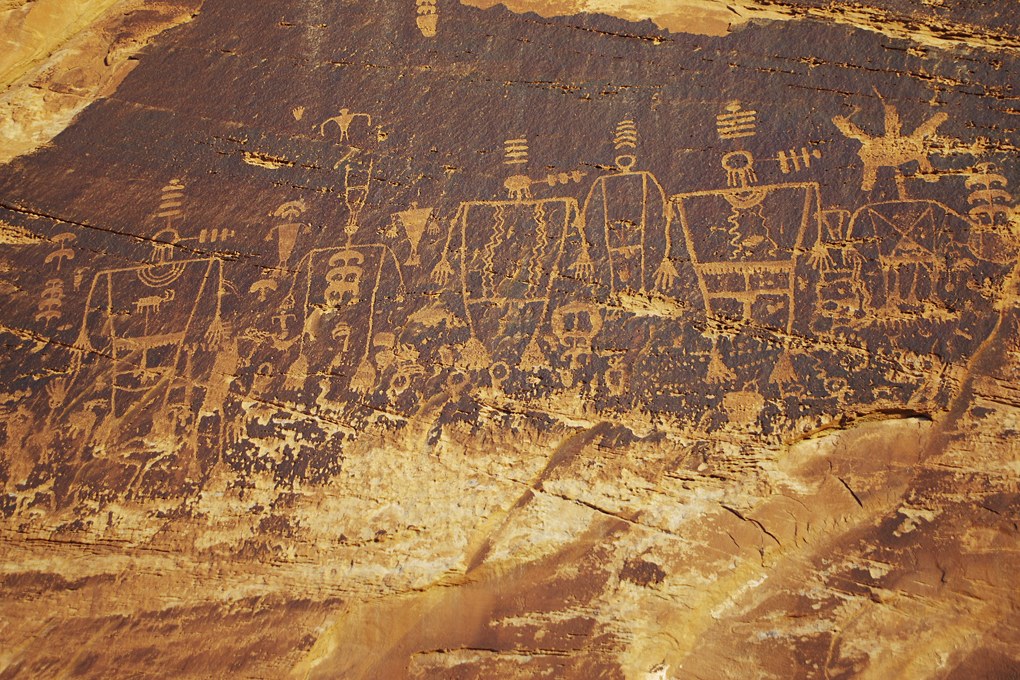
The striking headdresses on these human-like figures are a feature of the Western San Juan Basketmaker style. Notable too are the earrings, chest decorations, and sashes. The figure on the left shows an animal within the torso, similar to some of the Barrier Canyon Style figures at the Great Gallery. One interpretation is that the hanging feet represent a trance state. The figure on the right may be wearing a mask.
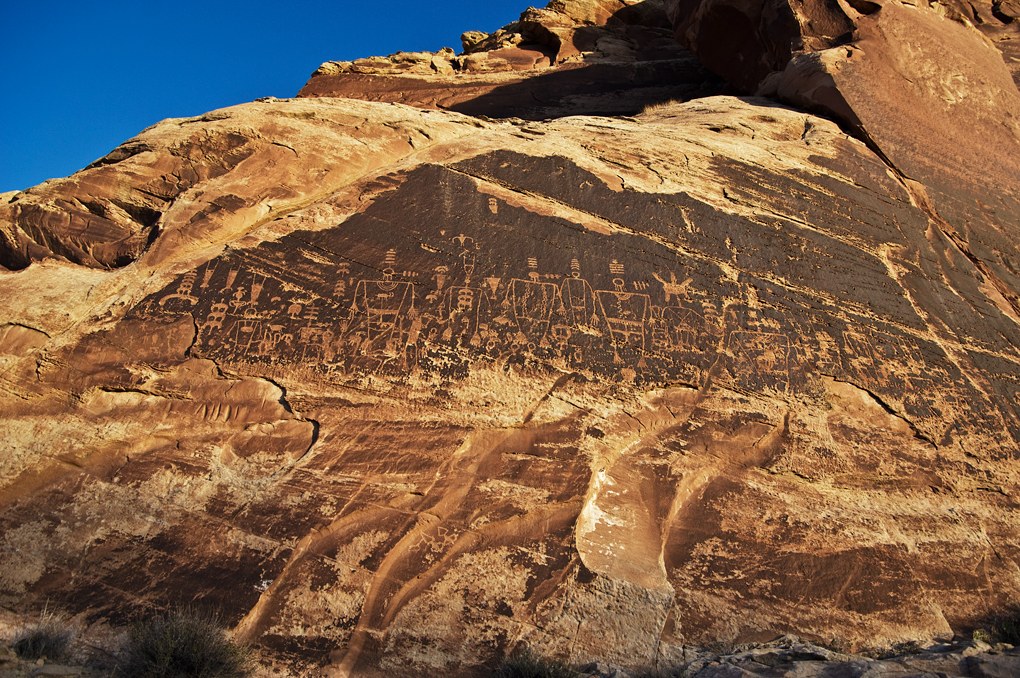
If one takes a raft trip from Bluff, Utah down the San Juan River, the guides always stop at this panel. The complete panel is more than twice this size. More forms continue to the right but they are quite faded.
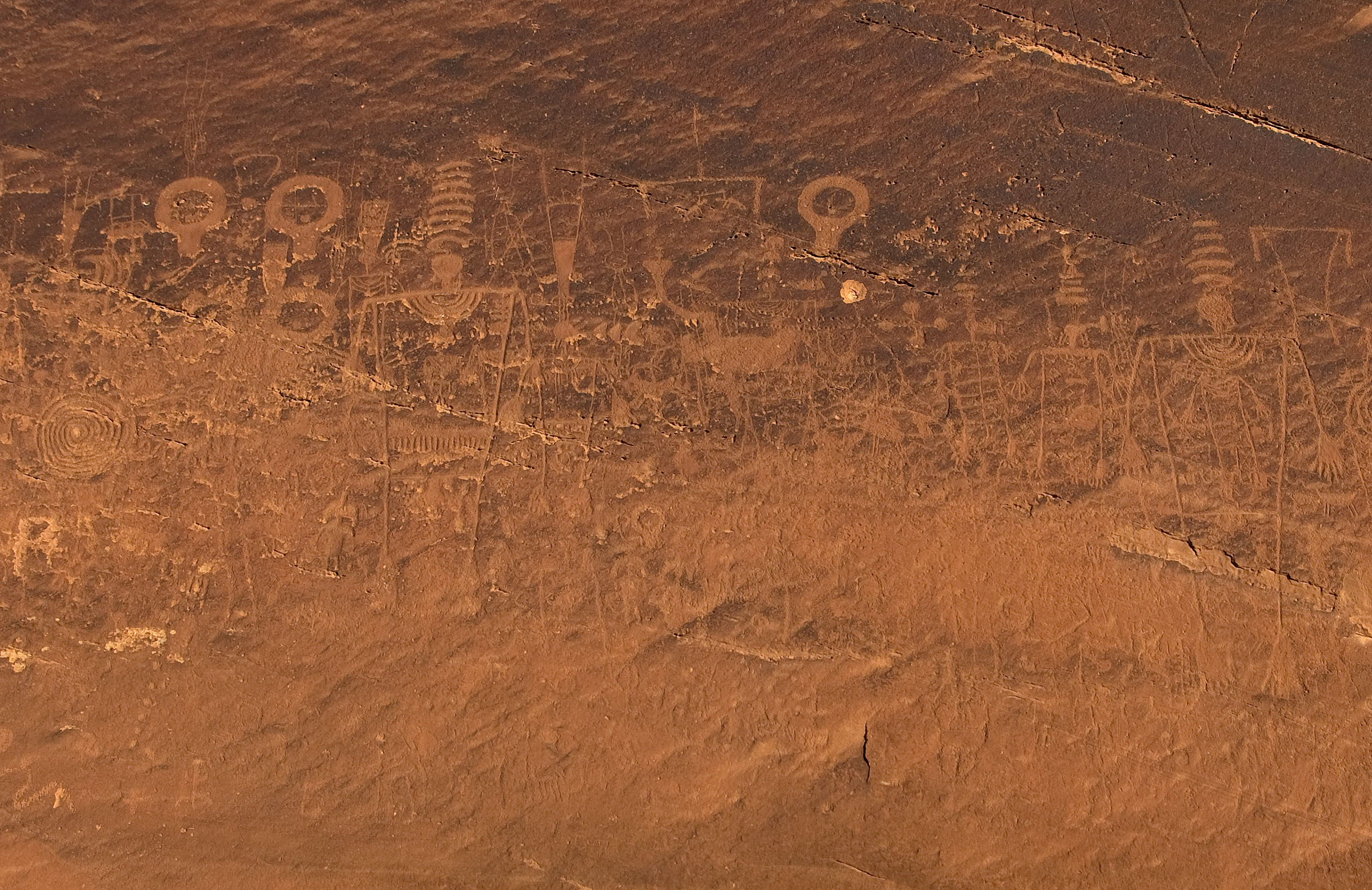
One of the faded sections around to the right. It looks crowded partly because Glen Canyon Style 5 petroglyphs were already here.

San Juan Basketmaker figures share this panel with faint Glen Canyon Style 5 forms that may be a thousand years older. The boxes in the enhanced version show where some of the older forms are.
Move your cursor over the photo (or tap it on a phone) to see an enhanced version.
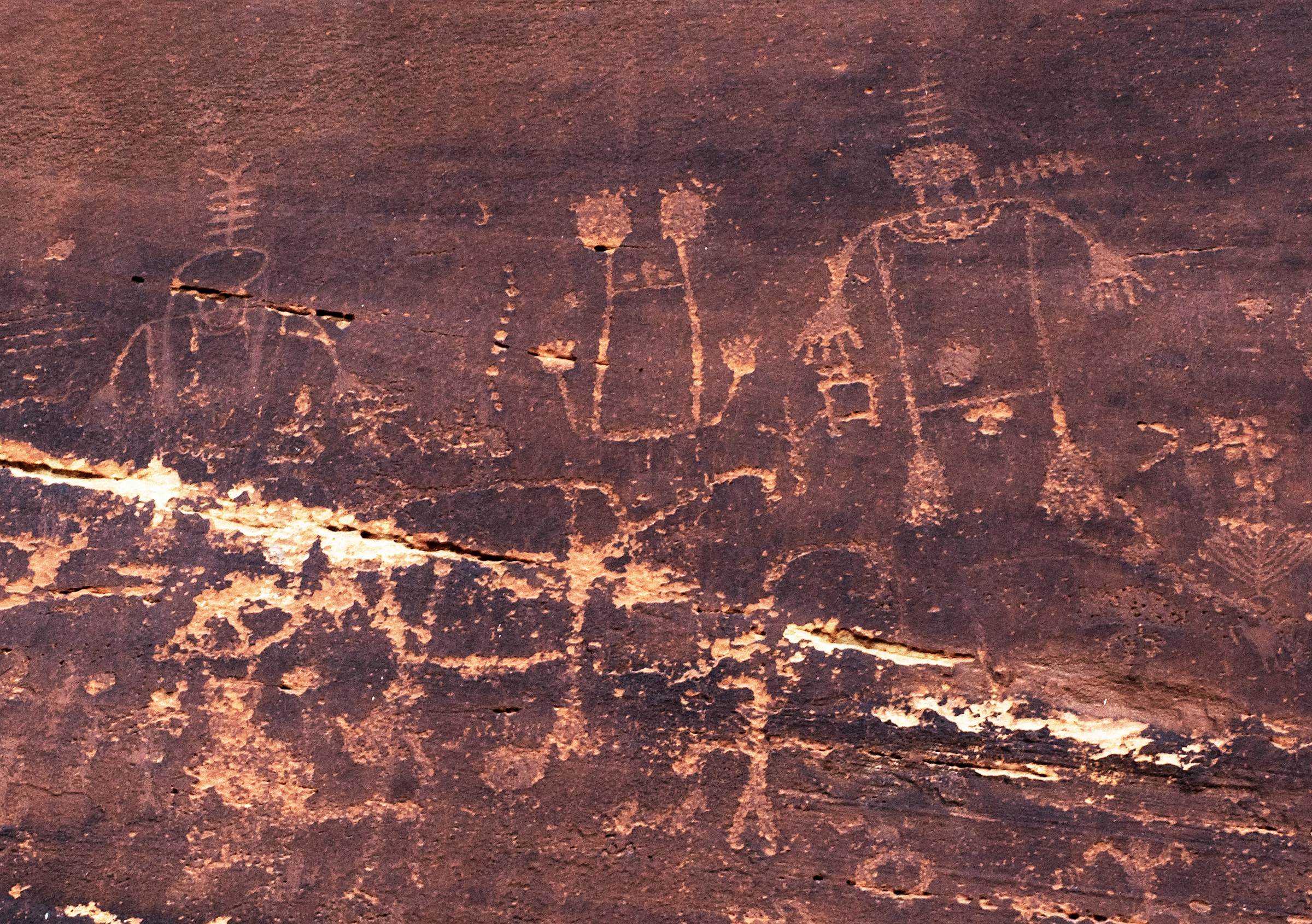
Another section of the panel. An upside-down figure is generally thought to represent death.
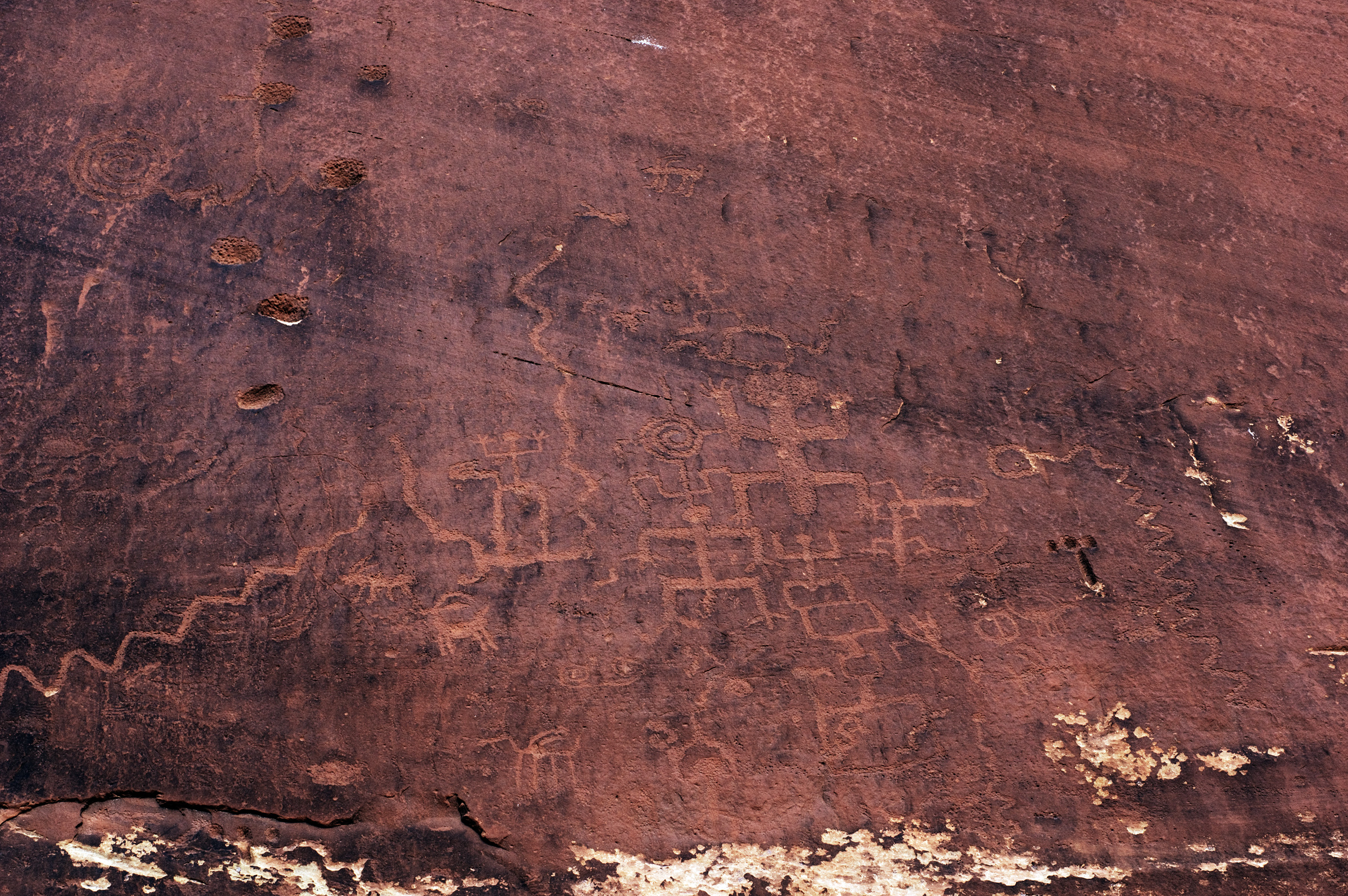
Pueblo II to Pueblo III rock art, at least 500 years younger than the Basketmaker figures.
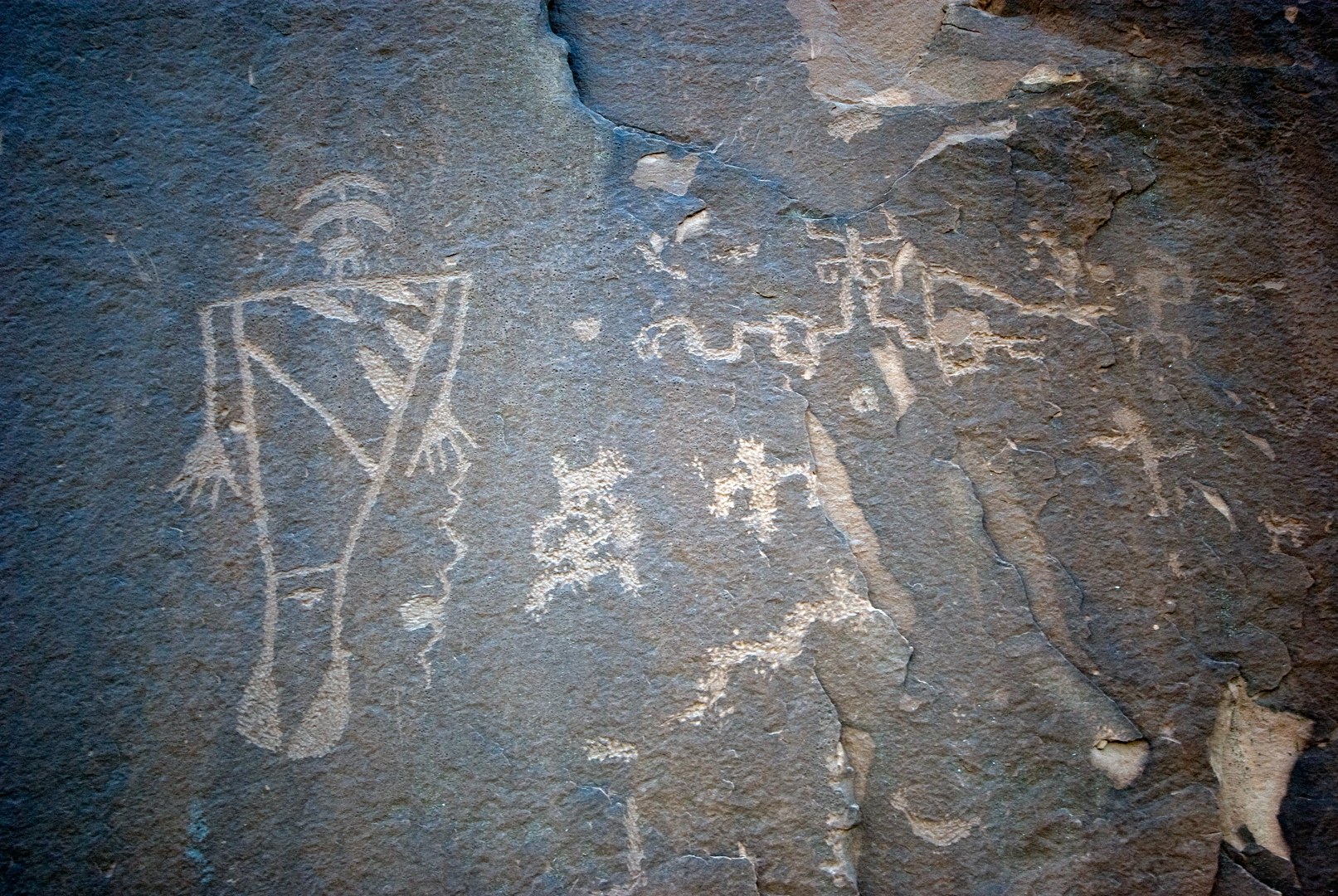
This beautifully defined figure is farther down the river. Note the snake biting the finger.