
First Look
These six photographs are a good place to start exploring the site.
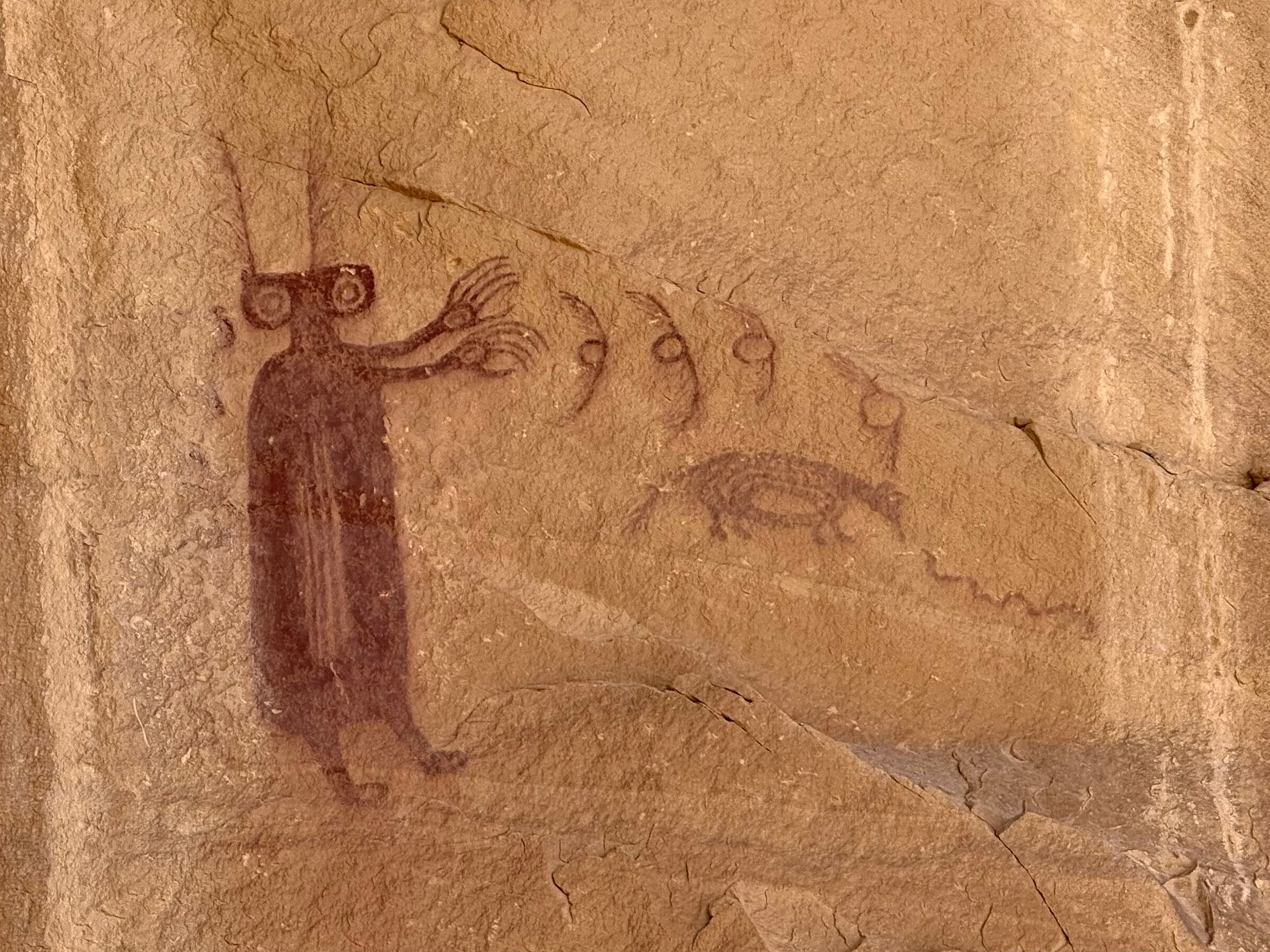
This human-like figure is notable for its large ringed eyes, stylized long fingers, the holes in its hands and feet, and the "feathers" on its head. The four forms above the animal and snake could be birds.
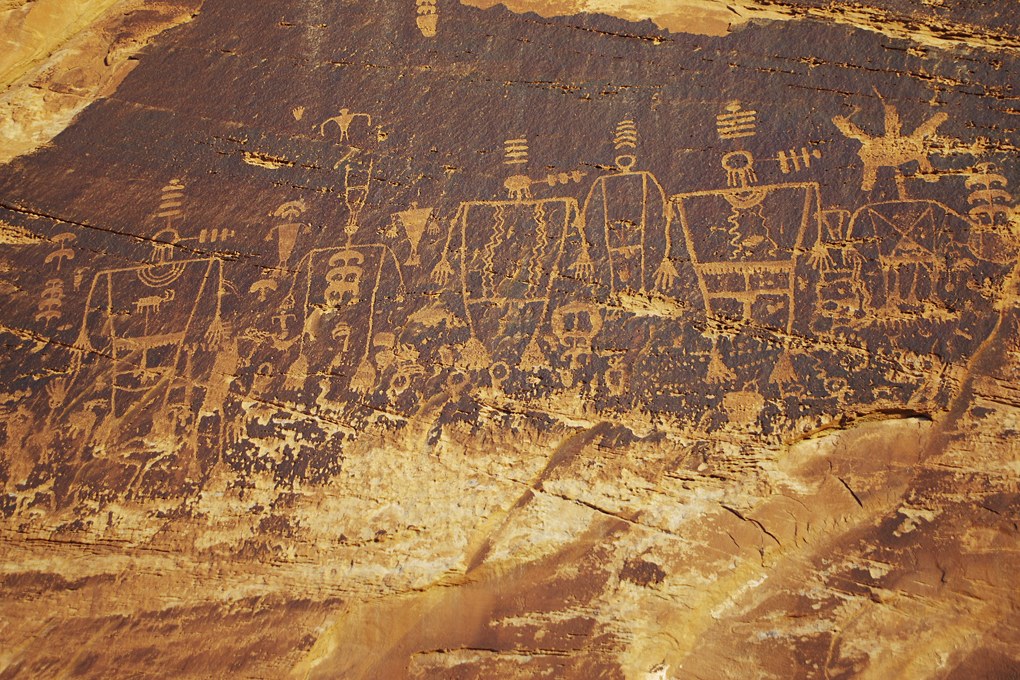
The striking headdresses on these human-like figures are a feature of the Western San Juan Basketmaker style. Notable too are the earrings, chest decorations, and sashes. The figure on the left shows an animal within the torso, similar to some of the Barrier Canyon Style figures at the Great Gallery. One interpretation is that the hanging feet represent a trance state. The figure on the right may be wearing a mask.
See the Ancestral Pueblo gallery: Western San Juan Basketmaker-style Petroglyphs
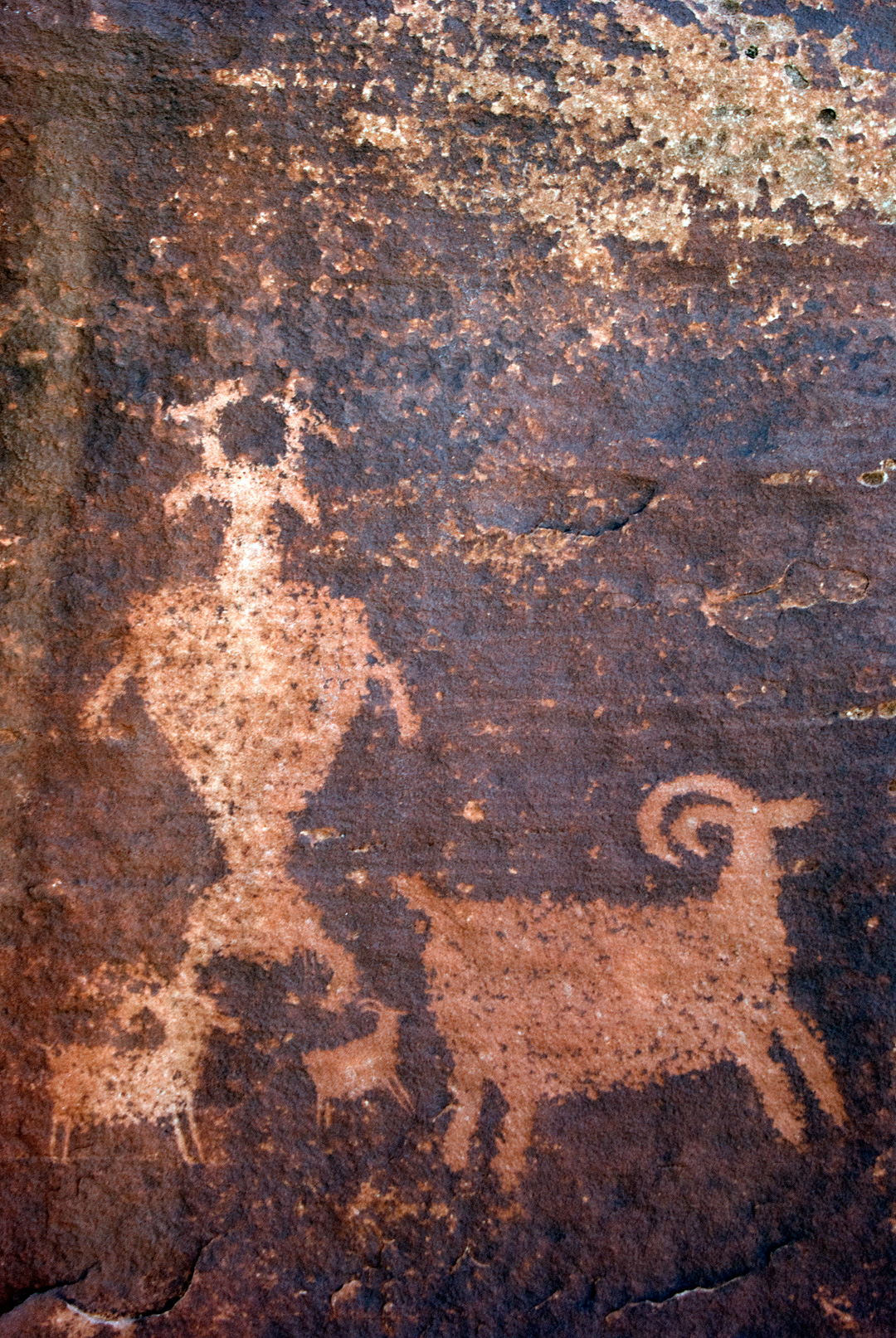
This is a classic Fremont image: a human-like figure with a pinched waist and a horned headdress. Beside it stands a bighorn sheep with curled horns, a favorite subject of Fremont artists.
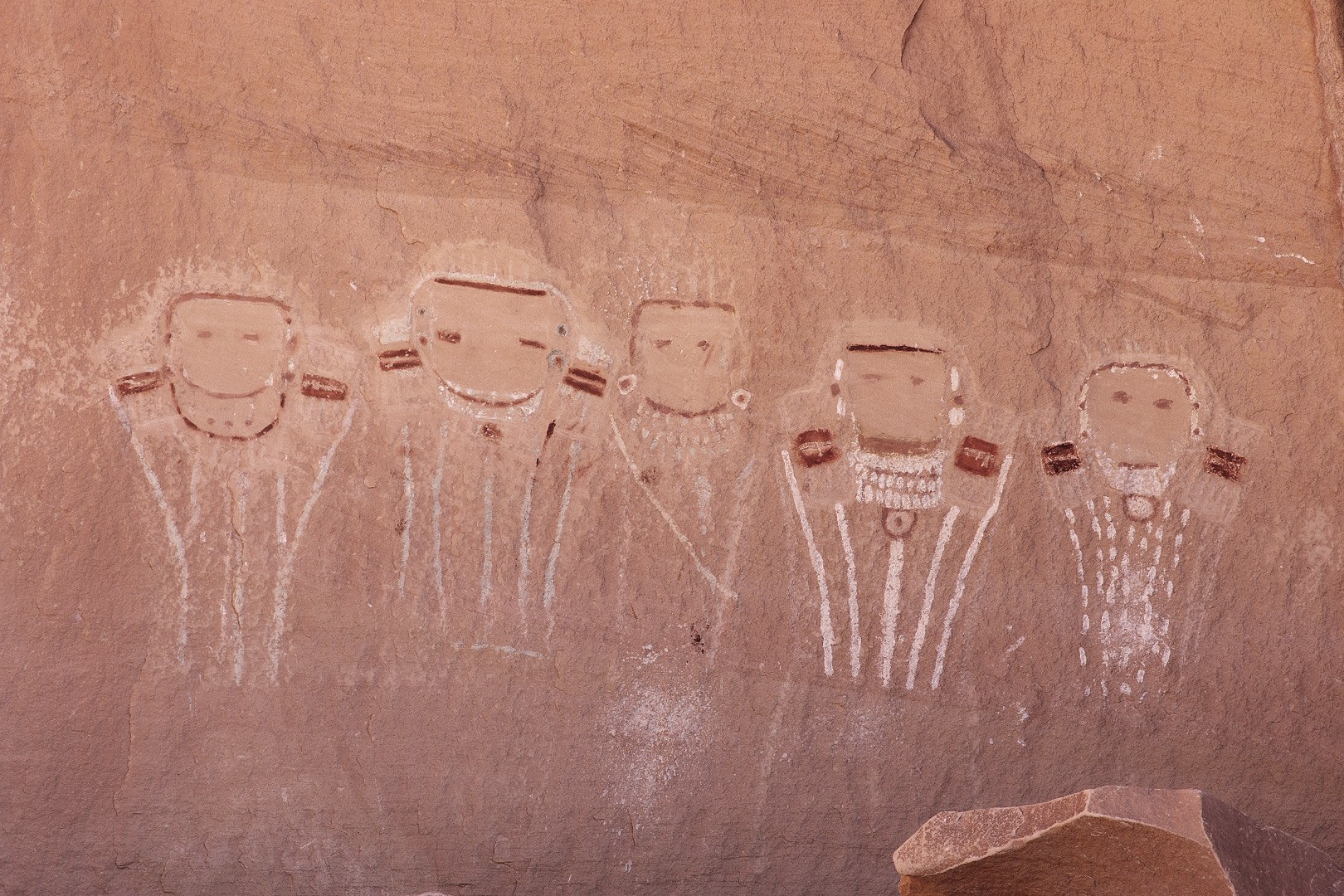
The well-known Canyonlands Five Faces panel. This panel is situated partway up the wall of a small alcove. You generally view it from the other side of the alcove, about 30 feet / 10 meters away, unless you want to walk a narrow ledge. It is best seen in the morning or late evening when the sun is not on it. Note how the artist scraped the rock before painting the faces.
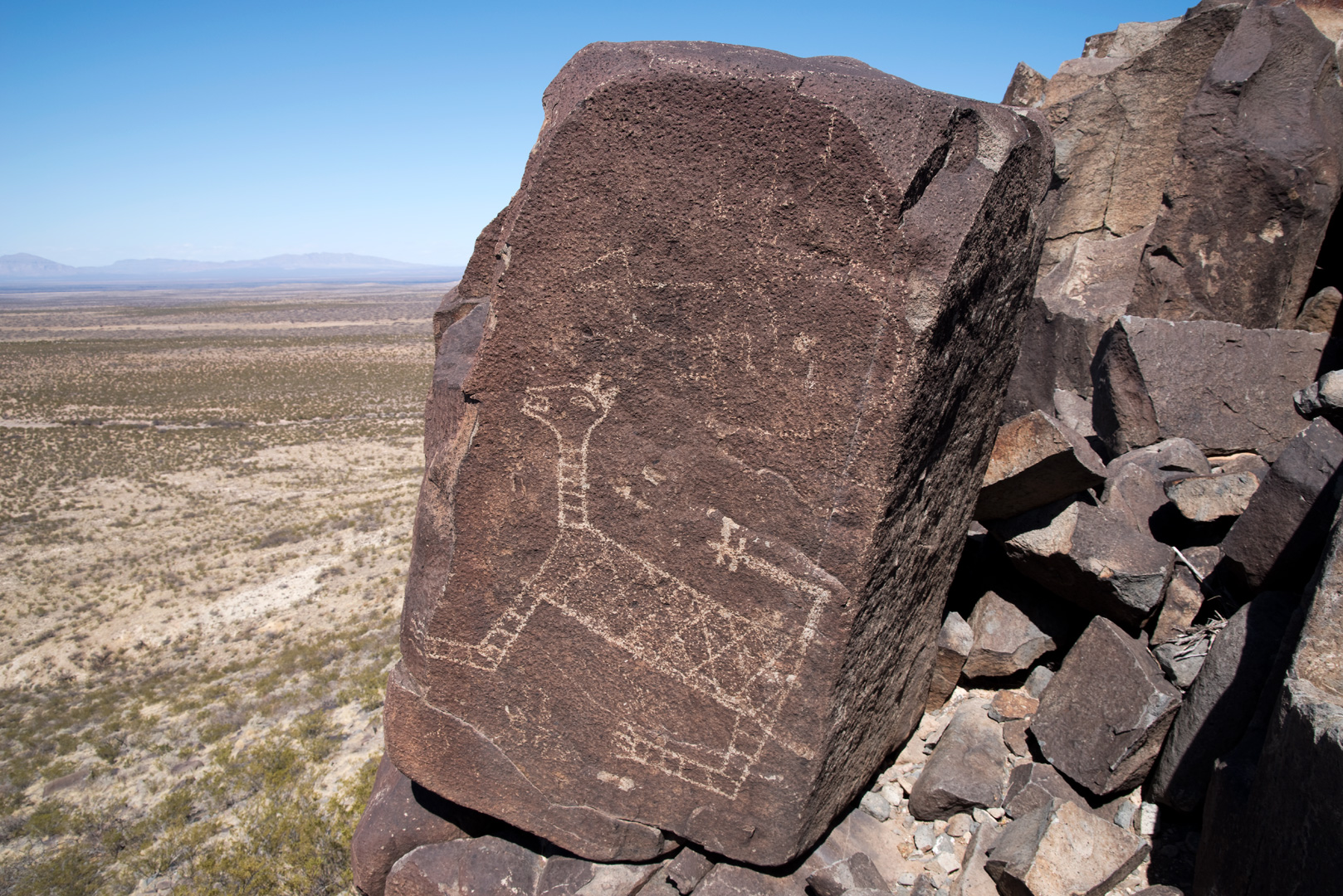
A stylized mountain lion with a cross-hatched body.
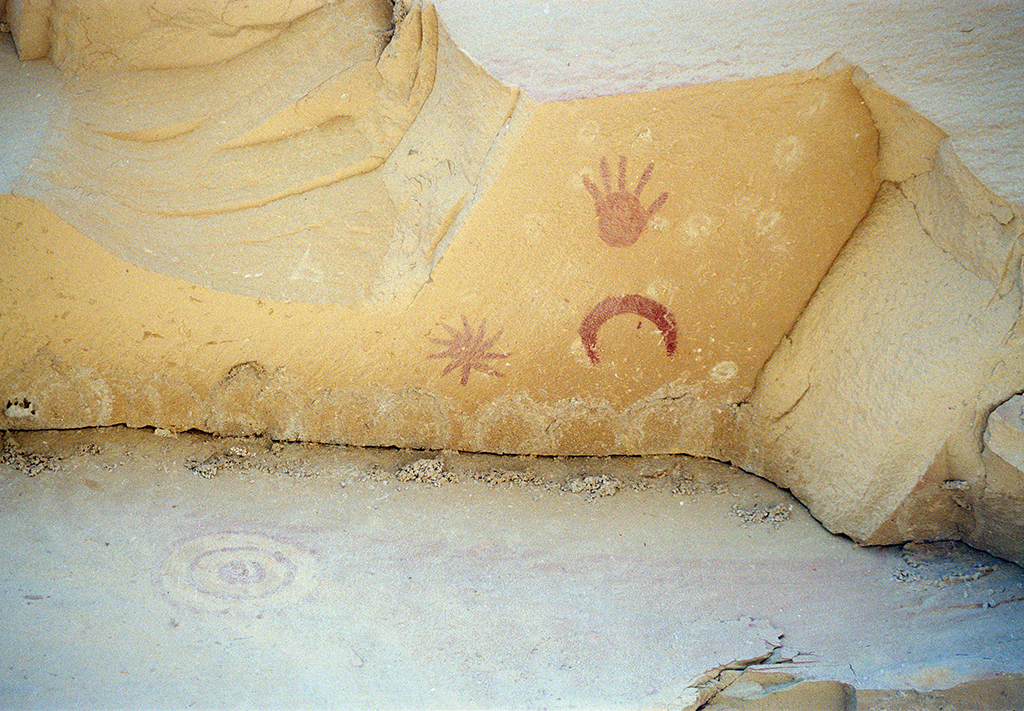
On July 4, A.D. 1054, inhabitants of earth saw a bright object in the sky, easily visible in daytime - the supernova that created the Crab Nebula. The moon was a small crescent. Some think the Ancestral Puebloan people in Chaco Canyon recorded the supernova event with this rock art panel.
In the spring of 1066, twelve years after the supernova, Halley's comet appeared. That event may be depicted lower on the panel with the circles and very faded paint trailing off to one side, like a comet’s tail.
Move your cursor over the photo (or tap it on a phone) to see an enhanced version.